
Same Sphere and Cylinder Doesn't Mean Same Fit
Why would two boxes of toric lenses, both stamped with my exact sphere and cylinder power, sit completely differently on my eye by the second blink? That question followed me around for days after a PerfectLens shipment landed on the porch, the blister packs stacked the way the listing photo promised, expiration dates matching what the site had shown before I checked out. Buying contact lenses for astigmatism online always comes down to trusting a card full of numbers, and after seven years of ordering from whichever shop had the best price on my prescription that month, I've learned which numbers actually decide whether a lens stays put.
Most first-time toric buyers treat a matching sphere and cylinder as the whole approval process, the same way a client might assume a document is finished once the spelling checks out. It isn't. Astigmatism correction depends on the axis sitting in the right place on the eye, and a toric lens holds that axis with a weighted base built into the bottom edge of the lens. Once that ballast lets the lens rotate more than roughly ten to fifteen degrees off the axis printed on my prescription card, the page in front of me stops sitting flat, no matter how well the sphere and cylinder matched the listing.
Why Do Toric Lenses Need a Weighted Base?
Ballast is the part nobody explains on the product page. A spherical lens can spin freely on the eye and it makes no difference, since the correction reads the same all the way around the curve. A toric lens can't do that, so it carries extra weight low on the edge, built to keep gravity and the eyelid holding the axis in place instead of letting it drift. Rotation past that ten-to-fifteen-degree window is what turns a clean page into one full of doubled letters, and it's also why two lenses with identical prescriptions but different ballast designs can feel nothing alike.
Base curve and diameter play into that same rotation problem, even though they sit in smaller print than the power on most listings. A box that matches my sphere and cylinder but ships a different base curve still won't seat the way it was fitted, and the ballast has no chance of holding an axis steady on a lens that's already sliding.
Checking a PerfectLens Order Against the Listing
Photographed evidence beats memory every time, which is the whole reason I keep a running log instead of trusting myself to remember which shop shipped what. The PerfectLens box I'm working from now listed sphere, cylinder, axis, base curve, and diameter separately, in that order, rather than folding everything into one power number the way a couple of budget sites do. I checked it against the spiral notebook that doubles as my vision care records, the one labeled by year on the desk, where every order gets a single line: shop, date, what was promised, what showed up. PerfectLens also runs a subscription option, one I've since paused without much hassle, though that's a separate story worth its own writeup.
Testing a fresh pair outdoors is the real proof, not the blister pack. I wore this batch on a bench in the Crocker Art Museum courtyard downtown over a lunch break, the kind of flat, even light that shows a rotating lens fast, and gave it the usual few blinks to settle. No drift, no doubling on the museum signage across the courtyard. That settling moment is worth more than any spec sheet, since it's the only test that happens on the actual eye instead of on a listing page.
Reading an Astigmatism Prescription Before You Order Online
Under federal rules, a doctor has to hand over your prescription right after a fitting, and it stays valid for a year under the Fairness to Contact Lens Consumers Act. That card is what every online order gets matched against, line for line, before a shop will ship anything toric.
A contact lens prescription for astigmatism carries more line items than a glasses prescription, and treating cylinder and axis as a footnote to the sphere is exactly how a toric order goes wrong; a box matched on sphere alone will still seat wrong on the eye, no matter how correct that one number looks. I've written out the full breakdown of what each field on that card means for an online order before, in my notes on reading a contact lens prescription for online orders, so I'll leave the field-by-field version there.
Verification is where a lot of online toric orders stall, since the shop has to confirm those numbers with the doctor's office before shipping, and I've covered what that back-and-forth actually looks like in my writeup on buying contact lenses online after an in-person exam. Skipping that step to save a few days is how a rotated axis ends up in the mailbox instead of the return pile.
Where the Zenni Coating Failed
Glasses carry a version of the same myth. I ordered a pair of frames from Zenni for the first time, expecting the anti-reflective coating to hold up the way the listing implied, and instead watched it start peeling at the edges before the frames had seen a full season of wear, a thin silver flake lifting the way a laundry detergent loses its punch after too many wash cycles instead of holding up the way the label promised. Matching a coating name on a spec sheet told me nothing about how that coating would actually wear.
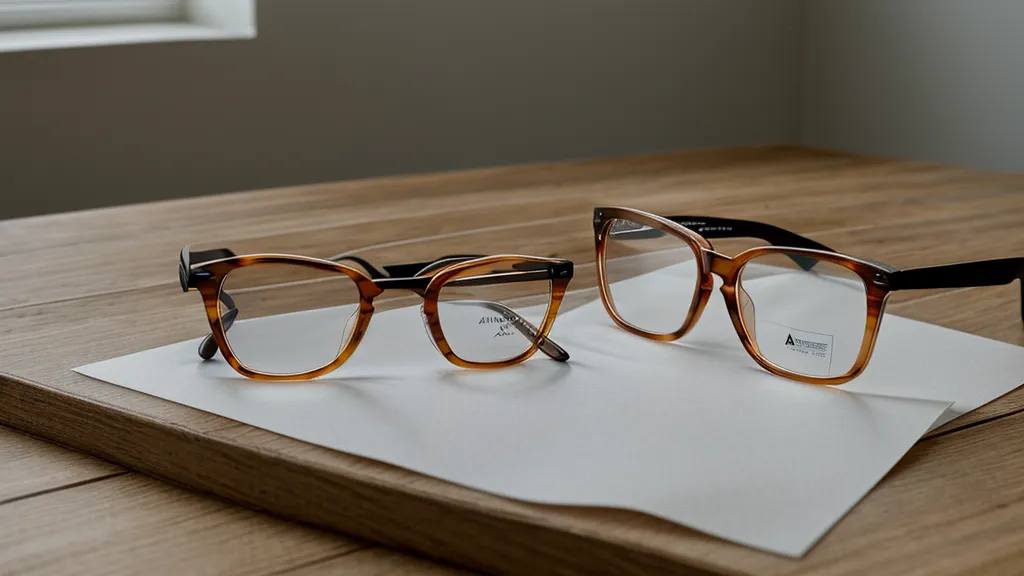
Sorting through frames at the desk afterward is when the pattern clicked. My home office sits in the alcove of a rented craftsman bungalow in Midtown, deep enough that the north-facing sash window gives even light without glare; I keep two prescription frames resting on a lens cloth at the edge of the desk while I sort out which pair needs replacing, just the one task lamp angled down and the overhead light left off. Running a finger along the bevel where the Zenni lens met its frame, tilting it toward the window, showed the same lesson the toric boxes did: what's printed on a listing and what a lens actually does under real light are two separate questions, and only one of them gets answered before checkout.
Match the Whole Card, Not Just One Line
Daisuke, a fellow remote editor in my freelance collective, carries a -6.25 prescription and is far pickier than I am about high-index lens availability, something we compare notes on whenever one of us is choosing a shop for a harder prescription. Pupillary distance matters just as much for his frame orders, though that's a glasses-side measurement and a separate problem from anything a toric contact lens box needs to get right. Between the two of us we've also traded notes on out-of-network insurance reimbursement paperwork, which neither shop mentions until after the order ships.
Fitting for a toric lens brand isn't something a generic-equivalent pop-up can substitute for, since the ballast design is specific to the manufacturer and a shop that swaps brands on you quietly is solving its own inventory problem, not yours. Monthly and daily replacement schedules complicate the comparison further, since a toric lens that rotates cleanly at the start of a cycle can behave differently by the time that same lens is due to be swapped out. The rule I actually check now, every time a new order lands, is simple: sphere and cylinder get you in the door, but the box only counts as a match if axis, base curve, and diameter are confirmed against the card too. Anything less isn't a matching prescription. It's a matching guess.