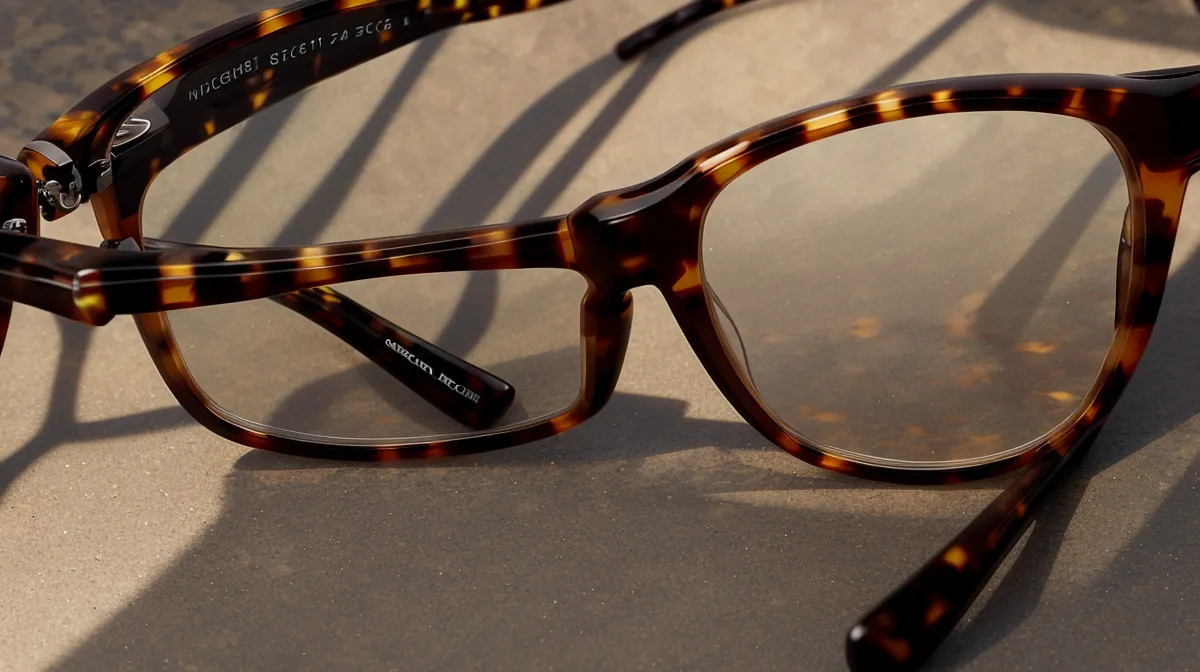
A 46mm frame doesn't guarantee a thinner lens edge than a 52mm one — the acetate around the rim matters more than the millimeters across it. That's the piece of advice most eyewear guides skip when they tell high-myopia shoppers to just "go small." I've spent seven years cross-referencing order after order against my own -5.00 prescription, and the frames that actually hid the lens thickness weren't always the narrowest ones on the page.
Quick disclosure before the receipts: shops like Yesglasses and EyeBuyDirect pay a commission if you buy through the links here, at no extra cost to you. That doesn't change what goes in the record — if a frame looks like gas-station plastic or a coating starts flaking, it gets logged the same as anything I paid full price for.
Does a Smaller Frame Actually Reduce Lens Thickness?
The logic behind the small-frame advice is real enough. A narrower lens width does mean less material at the edge for the same prescription, all else being equal. Where the advice falls apart is the "all else equal" part — frame shape, bridge width, and rim thickness all do more work than the horizontal measurement alone.
My own spreadsheet started because a chain optical store once quoted close to five hundred dollars for basic Essilor 1.67 lenses I later found direct for around one-thirty. That gap taught me to shop lens material carefully, but it took a few more orders to learn that material alone doesn't hide a steep prescription. A 1.67 lens sitting in a small, thin-rimmed frame can still show more edge than the same prescription tucked into full acetate.
Pairing a 1.67 index with a smaller-aperture frame cuts down visible edge thickness more reliably than jumping straight to a 1.74 lens in a wide frame — that trade-off is its own rabbit hole, and I've broken it down in more detail elsewhere, but it's worth knowing before you spend the difference on ultra-thin material.
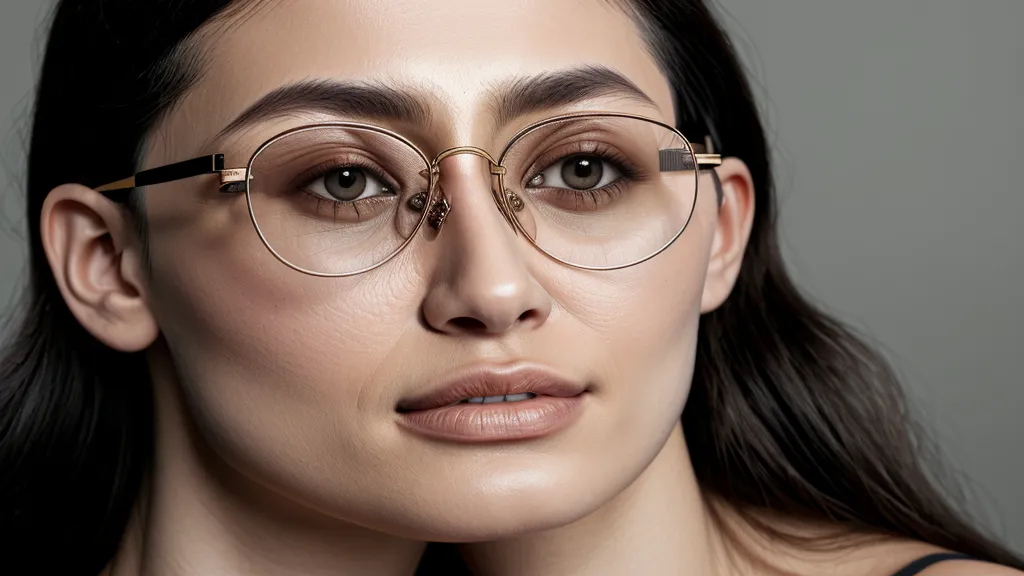
Going Too Small Creates a Different Problem for High-Myopia Eyes
Push the frame too far in the other direction, though, and you run into peripheral distortion. Force a -5.00 prescription into a tiny frame and you end up looking through the edge of the lens more often than the center, which drags in chromatic aberration — that faint rainbow fringe along high-contrast text that makes a monitor feel like it's vibrating. Ten hours a day at a 27-inch screen will teach you to notice that fringe fast.
Astigmatism complicates the picture further, since a cylinder and axis have to land in exactly the right spot on the lens regardless of frame size. Getting a toric correction fitted properly is a long enough topic on its own that I've given it a separate write-up rather than cramming it in here.
Searching for a Frame That Splits the Difference
The frames that solved this for me came out of Yesglasses's narrow and Asian-fit categories — built for higher bridges and narrower faces, but useful for any high myope because they keep the lens width close to that 48mm range without drifting into wire-frame territory. Full acetate, not metal, was the non-negotiable part.
Reading the Live Optician Review Before the Lab Cuts Anything
One order in my archive — a chunky tortoise-shell acetate pair — came with a "live optician review" step at checkout, which is more than most shops offer once you hit submit. I've written before about how to measure pupillary distance for online prescription glasses, and there's always a flicker of doubt entering a -5.00 sphere with a bit of cylinder on top. Having someone check the math before the lab cuts the lens is not something I take for granted.

What Arrived Versus What the Listing Photo Promised
The acetate frame arrived heavier than the listing photo suggested, packaging aside. Habit from being burned by "thin lens" marketing before, I ran a thumb along the inside edge first — smooth acetate instead of the sharp lens shelf I expected, the material tucked flush inside the rim instead of jutting past it. That flush finish is what my old wire frames from a different order never managed. If you want a side-by-side on how different shops handle these high-power orders, I put one together here: EyeBuyDirect vs Yesglasses high-myopia showdown.
Wearing them didn't feel like looking through a porthole, which a 48mm width should deliver but doesn't always. The real test came at the McKinley Park rose garden in East Sacramento, squinting at the little variety placards along the paths without the edges swimming the way they used to. The clearer sign came later at my desk, well past midnight, working through a manuscript pushing forty pages — I got to the last page without once stopping to dig my knuckles into my eyes.
My friend Daisuke, who edits fiction off two monitors for most of his waking hours, glanced at the new pair and said my face didn't look "that different" — which from a fellow screen-blind editor counts as a rave review.
The Contacts Side of the Archive, Left for Another Post
None of this is about the contacts side of my archive, though the two inevitably tangle. Trying to pause a ContactsDirect subscription through the app once sent me in circles for so long that customer service ended up handling it by phone, twice, before it actually stuck — a different kind of "thin edge" problem entirely. How a shop verifies your prescription once you've already had the in-person exam varies more than you'd expect, and reading a contact lens card correctly, sorting out an out-of-network reimbursement claim, or picking between dailies and monthlies for screen-heavy work are each long enough topics that they live in separate entries rather than a footnote here.
If the "Coke-bottle" look is what you're trying to avoid, stop shopping by lens index alone and start shopping by rim width and material. A full acetate frame from somewhere like Yesglasses will usually hide a -5.00 prescription better than any "ultra-thin" coating claim on its own. Keep your current RX card next to the listing page, and double-check the PD before you check out. Screen fatigue from a strong prescription is a separate fight, and on the days mine flares up, a bundle from CorneaCare has been the one thing that actually helps mid-shift.
The entry in my log for this particular pair reads: no edge protrusion, no lens creep at 48mm, holds up to daily desk use. That's about as close to a five-star review as my spreadsheet gets. If your own frames are starting to look like glass coasters, the narrow acetate section at Yesglasses is where I'd start looking, provided your face shape and your budget line up.