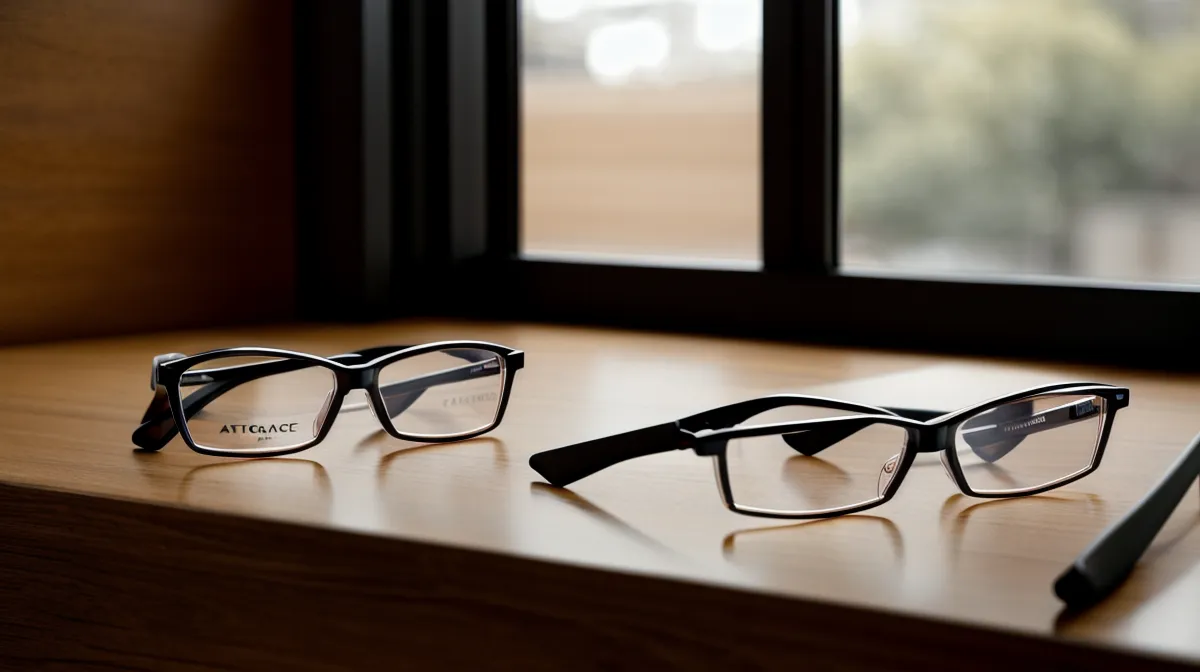
Late last November, a pair of thick-rimmed acetate frames arrived from an online shop while I was in the middle of a heavy developmental edit. The listing photo showed a perfectly level bridge and straight temples; the reality on my face was a three-degree slant to the left that made every line of text look like it was sliding off the screen. For someone with a -5.00 sphere prescription, even a minor misalignment isn't just a cosmetic annoyance—it is a functional failure.
Buying online saved me hundreds compared to the chain store that once quoted me nearly five hundred dollars for basic 1.67 lenses, but the trade-off is that I am now my own frame stylist. There is no optician to whisk my glasses into the back room for a quick bend. When those frames arrived crooked, I had to decide whether to ship them back or handle the final fit myself. A poorly aligned frame is like a missing serial comma; the casual observer might not name the error, but the entire page feels slightly off-balance.
Identifying Your Frame Material Before You Bend
Before you even think about applying pressure to a frame, you have to know what it is made of. My record of dozens of orders shows that most of what I buy is either cellulose acetate or some form of stainless steel. These are the only materials that really want to be adjusted. If you try to force a fit on modern injected plastics or memory metals, you are likely to snap the frame. These lightweight materials are often designed to return to their original factory shape; amateur adjustment attempts usually end with a trip to the trash can.

Mid-January was when I finally sat down with my running order log to cross-reference my frame materials before attempting a fix. I had a pair of 'thermoplastic' acetate frames that were pinching behind my right ear. Acetate is a beautiful material made from wood pulp and cotton fibers, but it is stubborn when cold. To move it, you need heat. Professional opticians use a salt pan or a specialized hot air blower to reach a consistent 120-130 degree Fahrenheit range. At home, I use a hair dryer or a bowl of very warm—not boiling—water.
The Warm-Water Soak for Acetate Frames
In early spring, I tackled a pair of frames that wouldn't stop sliding down my nose during long shifts at the desk. I ran the temples under warm water for about thirty seconds. As the material warmed, I noticed that faint, vinegary scent of heated acetate—a hallmark of the material's chemical makeup. There is always a moment of surprising resistance where the plastic feels like it will never budge, followed by a sudden, gummy yield to thumb pressure. That is when you make your move.
I gently curved the temple tips inward to hook more securely behind my ears. This small tweak is essential when you are dealing with the weight of high-index 1.67 lenses. Even though these lenses are thinner than standard plastic, a -5.00 power still carries enough mass to pull a loose frame forward. If the frame isn't anchored, your pupillary distance (PD) alignment shifts, and the world starts to blur at the edges. I always check my original lens material specs for high myopia before I start, just to make sure I am not dealing with a coating that might craze under heat.
Adjusting Nose Pads for Weight Distribution
Metal frames are much simpler, but they require a delicate touch. A few weeks ago, I received a pair of wire-rims where the nose pads were dug into the bridge of my nose like a pair of angry pincers. This was causing tension headaches by 3:00 PM every day. I used my thumbnail to gently nudge the pad arms outward, widening the gap by maybe two millimeters. It doesn't sound like much, but it changed everything.
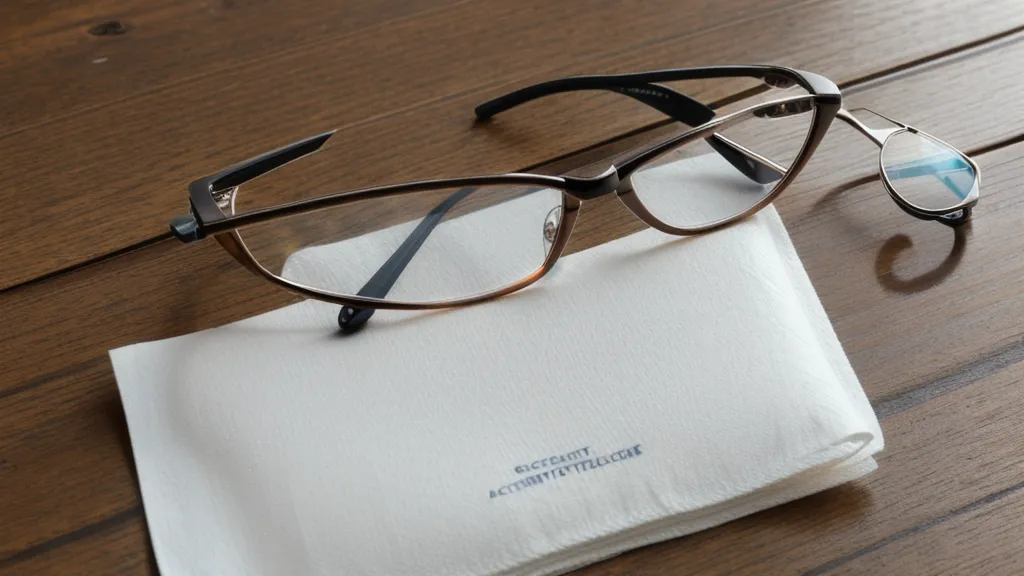
There was an instant cooling sensation on the bridge of my nose when the weight of the 1.67 lenses was finally distributed evenly across the pads. The frames stopped 'floating' and sat exactly where my PD was measured—right in the sweet spot of the lens. When the nose pads are wrong, the glasses sit too high or too low, which effectively changes your vertical axis. For a freelancer who spends eight hours a day staring at 11-point Garamond, that vertical shift is the difference between a productive afternoon and a migraine. If you find yourself constantly reaching for your frames, you might want to consider switching from glasses to contacts with high myopia for those high-intensity workdays where zero frame-slip is the goal.
When to Stop and Ship Them Back
The hardest part of DIY adjustment is knowing when to quit. If you have adjusted the temples and the nose pads and the frames still feel 'wrong' on your face, the issue might be the frame geometry itself. Sometimes a bridge is just too wide for your anatomy, or the temple length is too short to ever hook properly. My order history is littered with a few pairs that I tried to 'save' with heat and pliers, only to realize I had spent forty-five minutes trying to fix a fundamental sizing error.
Modern lightweight materials, particularly those marketed as 'flexible' or 'memory' frames, should generally be left alone. They are designed to spring back, and if you apply enough heat to actually change their shape, you risk bubbling the finish or melting the hinges. If a pair of TR90 frames arrives crooked, don't reach for the hair dryer. Check the return policy and send them back. The beauty of buying online for around one-thirty instead of five hundred is that you can afford to be picky about the baseline fit. A few millimeters of adjustment can make a -5.00 prescription feel significantly clearer, but it can't turn a poorly sized frame into a comfortable one.