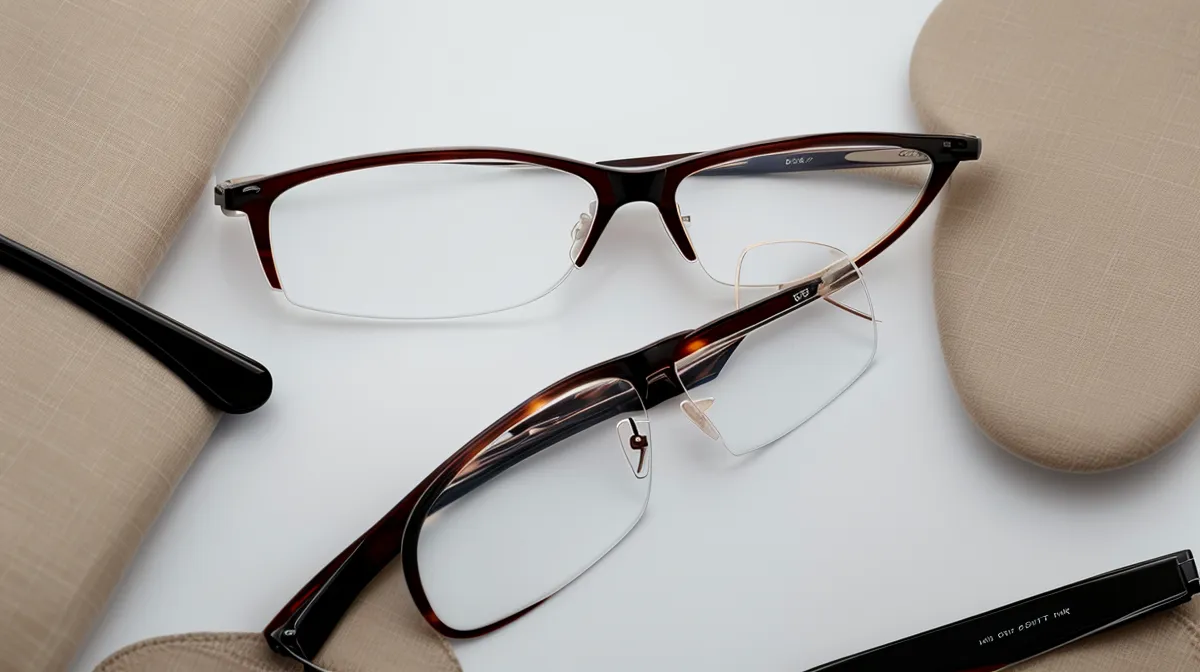
Late one evening last October, the blue light from my dual monitors felt heavier than usual against my -5.00 lenses, making the copy I was editing blur into a grey haze. As a freelance copyeditor, my eyes are my primary tools, and when they feel like they are dragging through mud, my productivity drops to zero. I was staring at a manuscript about the history of the Sacramento Valley, but all I could see was the ghosting around the black letters. It was that specific, nagging visual fatigue that happens when your prescription is technically correct but your lens material is working against you.
I have been tracking every optical purchase in a running spreadsheet since 2019, when a local chain store quoted me nearly five hundred dollars for a basic pair of Essilor 1.67 lenses. I eventually found those same lenses direct for around one-thirty, and that discrepancy is what turned me into a bit of a documentation obsessive. Every order—the shipping time, the listed price versus what I actually paid, and the tactile feel of the finished product—gets a row in my record. When the blur started becoming a daily distraction during my late-night sessions, I knew it was time to audit my current rotation of frames and materials.
The Geometry of the High-Myopia Prescription
When you have been wearing glasses since age eleven like I have, you stop seeing your prescription as a medical document and start seeing it as a set of constraints. My sphere power hovers around -5.00, which is that awkward middle ground in the world of myopia. It is high enough that standard 1.50 index lenses, made of CR-39 plastic, look like the bottom of a soda bottle, but not quite high enough to always justify the exorbitant cost of ultra-high-index 1.74 materials.
The standard lens index of 1.50 has an Abbe value of 58. In optical terms, the higher the Abbe value, the less the light is dispersed as it passes through the lens. It is the gold standard for clarity. However, at -5.00, a 1.50 lens is thick—thick enough that it spills out of the sides of most acetate frames and adds a physical weight to the bridge of my nose that gives me a tension headache by mid-afternoon. For years, I just accepted the weight as the price of sight, but my records showed me that the trade-offs in online shops are more nuanced than the 'Good, Better, Best' tiers suggest.
The EyeBuyDirect Deep Dive
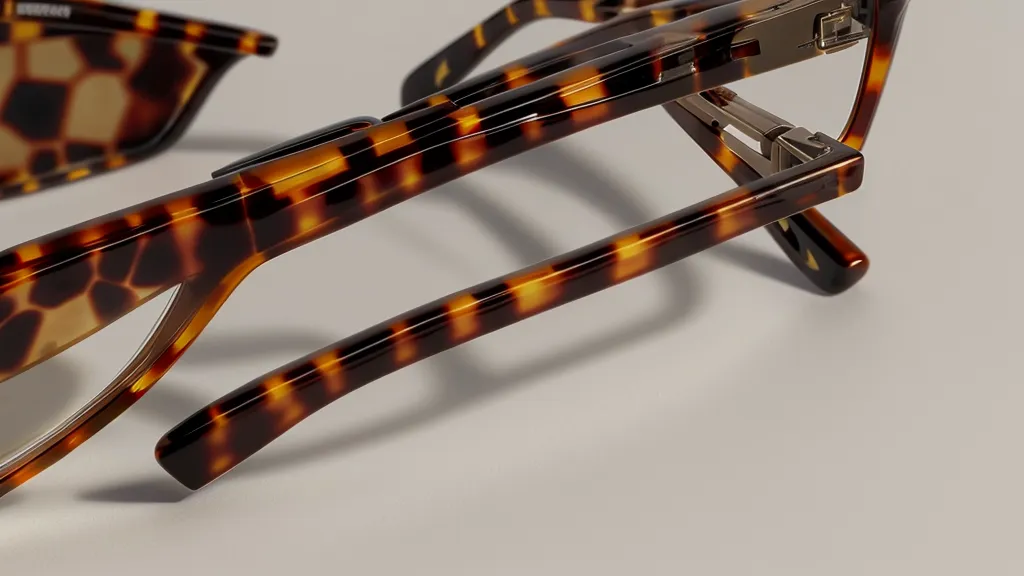
One Tuesday afternoon last July, I sat down to place an order with EyeBuyDirect. I had a specific frame in mind—a classic tortoise acetate—but the real decision was in the lens selection. Online shops usually offer 1.57 as their 'standard' thin lens, followed by 1.61, 1.67, and 1.74. For my specific Sacramento work-from-home setup, where I am toggling between a 27-inch monitor and a tablet, the choice of material is more important than the frame itself. I was looking for the 'sweet spot' where the lens is thin enough to look decent but clear enough that I am not fighting chromatic aberration all day.
I had been using a pair of 1.57 index lenses I bought in early March, but they felt 'off' in a way that’s hard to describe to someone with perfect vision. It is like a missing serial comma in a long list; the reader might not be able to point to the error immediately, but the rhythm of the page feels broken. In my case, the 1.57 lenses had more edge distortion than I could tolerate. I decided to compare the 1.67 high-index lens option against the ultra-thin 1.74. While 1.74 is marketed as the pinnacle of lens technology because it is the thinnest and lightest, it comes with a hidden cost: a much lower Abbe value. Most 1.74 materials have an Abbe value in the low 30s, which is a significant drop from the 58 you get with standard plastic.
Measuring the Reality of High-Index Materials
When the new 1.67 lenses arrived, I did what any person with a spreadsheet and a minor obsession would do: I pulled out my tools. I remember the sharp, metallic click of digital calipers measuring the 5mm edge thickness of my old 1.57 lenses against the new 1.67 pair. The 1.67 lenses were visibly slimmer, sitting flush against the frame's edge. But thickness is only half the story. The real test is the 'Abbe test'—how my eyes feel after eight hours of looking at 11-point Garamond font.
I noticed a slight rainbow-colored fringe appearing around the black text of a manuscript when I glanced toward the edge of the 1.74 lenses I had tried previously. This is chromatic aberration. It is the lens failing to focus all colors of light at the exact same point. For sensitive wearers, or anyone whose job involves staring at high-contrast black text on a white background, this fringe is a nightmare. It creates a subtle but persistent eye strain that feels like a dull pressure behind the eyeballs. In my experience, the 1.67 index, with an Abbe value of 32, is the actual sweet spot for a -5.00 prescription. It offers a significant reduction in thickness over the 1.57 or 1.50 without the severe clarity trade-off of the 1.74.
I have often wondered if I should be getting lens replacement for existing frames at online optical shops instead of buying new ones every time I want to test a material, but the cost of the 1.67 package at EyeBuyDirect is often lower than the shipping and labor for a replacement. My July order total was roughly a quarter of what that chain store quoted me years ago, and the quality of the coatings—which I track like laundry detergent durability cycles—held up remarkably well against my habit of cleaning my glasses with my hem when I’m in a rush.
The Weight of Choice
By mid-August, I had been wearing the 1.67 lenses for several weeks. The physical difference was undeniable. Updating my master record with the new order details, I noted the literal weight difference on the bridge of my nose. When you spend your life in a -5.00 sphere, you become hyper-aware of the 'slide'—that moment when your glasses begin to migrate down your nose because they are too heavy for the frame’s grip. With the optimized 1.67 material, the slide was gone.
However, frame choice still plays a massive role in how these materials perform. Even the best 1.67 lens will look thick if the frame is too wide, as my -5.00 prescription gets thicker the further you move from the optical center. I’ve written before about how are plastic or metal frames better for high myopia at Yesglasses, and that logic applies here too. A thick acetate frame can hide a 1.67 lens edge perfectly, whereas a thin metal frame will leave that edge exposed like a poorly edited footnote.
Final Reflections on the High-Index Myth
The industry likes to push the 1.74 ultra-high-index as the 'premium' choice, but for many of us in the -5.00 to -7.00 range, it’s a case of diminishing returns. You are paying more for a thinner lens that actually provides a lower quality of vision due to the Abbe value. If you are a copyeditor, a coder, or anyone who lives and dies by the sharpness of text, that 'rainbow fringe' is a dealbreaker.
My current rotation now leans heavily on the 1.67 material. It handles the Sacramento sun when I’m out for a walk, and it doesn’t fail me during a twelve-hour editing marathon. My spreadsheet doesn’t lie: the most expensive material isn’t the best; the best material is the one that lets you forget you’re wearing glasses at all. When I close my laptop now, my eyes don’t feel like they’ve been through a war. They just feel like they’ve done a day’s work, which is all I can really ask for.