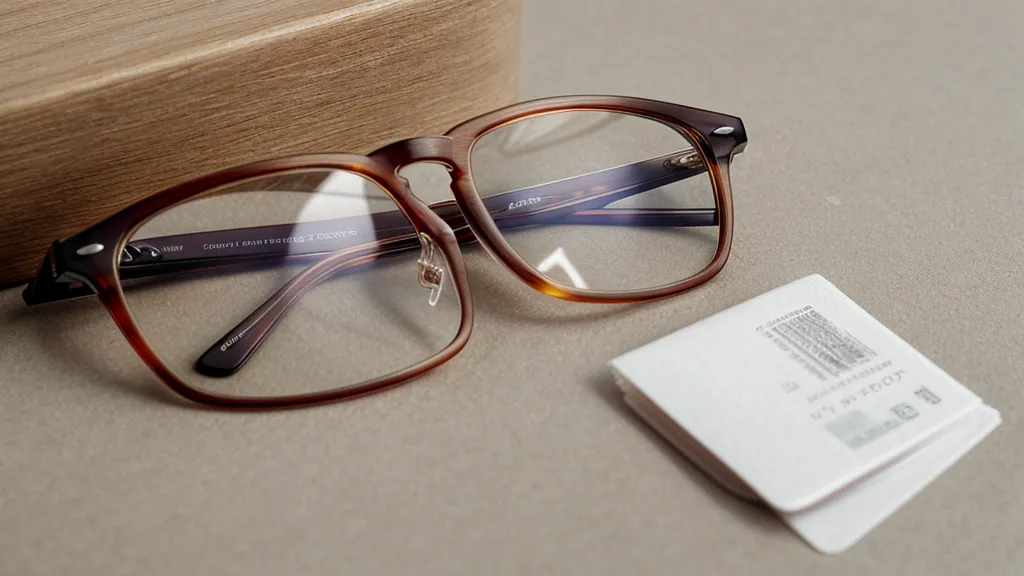
How many minutes of actual sun does a photochromic lens need before it decides to do its job? That question sat with me longer than it should have after my EyeBuyDirect order landed: a padded mailer, perforation strip half torn, the kind of paper crinkle that means a package went through one too many hands. Inside was an acetate frame under thirty dollars, plus the 1.67 high-index upgrade and a photochromic coating stacked on top, because a -5.00 sphere doesn't get to shop the base price list. I'd tried Warby Parker's home try-on kit first; once my prescription cleared -4, fewer than two frame options were even available. High myopia narrows the field before you've picked a color, and photochromic lenses were pitched to me as the fix that finally closes that gap outdoors.
Before the receipts: some of the optical shops, contact lens platforms, and vision plan providers linked here pay me a commission when you order through my link, at no extra cost to you. Every shop gets checked against my own running order log — if a frame showed up with a stripped screw or a lens sat as crooked as a missing serial comma, it's in the record whether or not the shop pays out.
The High-Index Upgrade EyeBuyDirect Pushes for High Myopia, in One Sentence
A -5.00 prescription in standard 1.50 plastic edges out like a block of glass wedged into a frame, which is exactly why EyeBuyDirect (which holds a 4.2 user rating) steers high myopes toward the thinner 1.67 index — I've laid out that math in full elsewhere, so here it's enough to say the photochromic layer gets added on top of whatever base lens you pick, not instead of it, and that surcharge is rarely explained before checkout.
Photochromic Lenses Go Blind Behind a Windshield or a Visor
Photochromic molecules only darken when they get hit with direct ultraviolet light, and most car windshields filter that wavelength out before it ever reaches your face. A photochromic lens depends entirely on that trigger, which is why the same failure shows up behind a full-face motorcycle visor — polycarbonate shields block UV the same way glass does, a strange gap for a vision-correction upgrade you paid extra for. I found this out the slow way, squinting through an entire freeway drive waiting for a tint that was never coming, then pulling over to dig actual sunglasses out of the glove box.
A neighbor of mine cycles the Jedediah Smith Memorial Trail most weekends and never runs into this problem — she's out in open sun for hours, nothing between her lenses and the light, so the tint gets to do exactly what it's built for. Mine just sit there clear behind glass or a visor, no better than a plain reading pair at midnight.
How Fast Do They Actually Tint on a Two-Minute Errand?
Here's the timing nobody mentions when you buy the upgrade: a quick errand isn't enough exposure. I noticed it first walking to check the mail — by the time I'd gone only as far as two doors down, reading house numbers on the way back, the lenses hadn't shifted at all. It takes sustained outdoor time, not a dash outside and back, before the chemical change kicks in. On the longer walk out to Trader Joe's on Arden Way in North Sacramento, the fade built slowly instead, closer to a long edit pass settling into a paragraph than a light switch, and by the time I reached the register the lenses had gone full smoky grey. Stepping back into the fluorescent aisle lights and watching that tint recede at the same unhurried pace never gets old. None of it touched the coating underneath, either, which lines up with what I found in my Best Lens Coatings for Prescription Glasses After Months of Use notes — the photochromic layer hasn't sped up wear on the anti-reflective coating any more than a normal wash cycle wears down a shirt. It's the harsh cycles you have to watch for, and this isn't one of them.
None of this matters if the order itself goes sideways before the lenses ever ship. I still check my PD number and frame width against the original RX card before confirming any cart, since a shop that gets the pupillary distance wrong will leave even a perfect photochromic lens feeling off-center, and a frame a size too wide undoes fit work an optician would normally catch by hand. Every shop I've ordered this upgrade from also wants some form of prescription verification before it'll attach photochromic to a lens above -4, whether that's a faxed card or a quick upload, so budget a day for that step alone.
Weighing the High-Myope Tax
Add the high-index surcharge to the photochromic add-on and you're paying the high-myope tax twice in one order. Skip the upgrade entirely if most of your outdoor hours happen behind a windshield or a lowered visor, and put that money toward a dedicated pair of prescription sunglasses from a shop like ContactsDirect instead — a fixed dark tint beats a UV-triggered one every time glass or plastic sits between you and the sun. Keep the upgrade if your day actually swings between a desk and the outdoors, errands and dog walks and patio meetings, since the convenience of not carrying a second case is real.
One reader, Fletcher Nwankwo, once emailed about a completely different order — the kind of message he writes in timestamped, numbered steps, like he's filing a bug report — asking whether his vision plan would treat a photochromic upgrade as sunglasses or as basic lenses for out-of-network reimbursement. I didn't have a clean answer; every plan reads that line item differently, so it's worth checking your own benefits summary before assuming the upgrade counts toward the same allowance as a regular pair. Toric corrections complicate this further, since fitting astigmatism into a photochromic lens already means juggling one extra variable before the color-change coating enters the math at all. If you want to test the whole combination before committing to it, the return policy for online glasses at EyeBuyDirect is worth reading first, since a remake window matters more on a lens combo this layered than it does on a plain single-vision pair. The photochromic upgrade solved the forgot-my-shades problem for most of my day, just not behind glass, and that's a narrower promise than the pitch for these lenses usually makes.