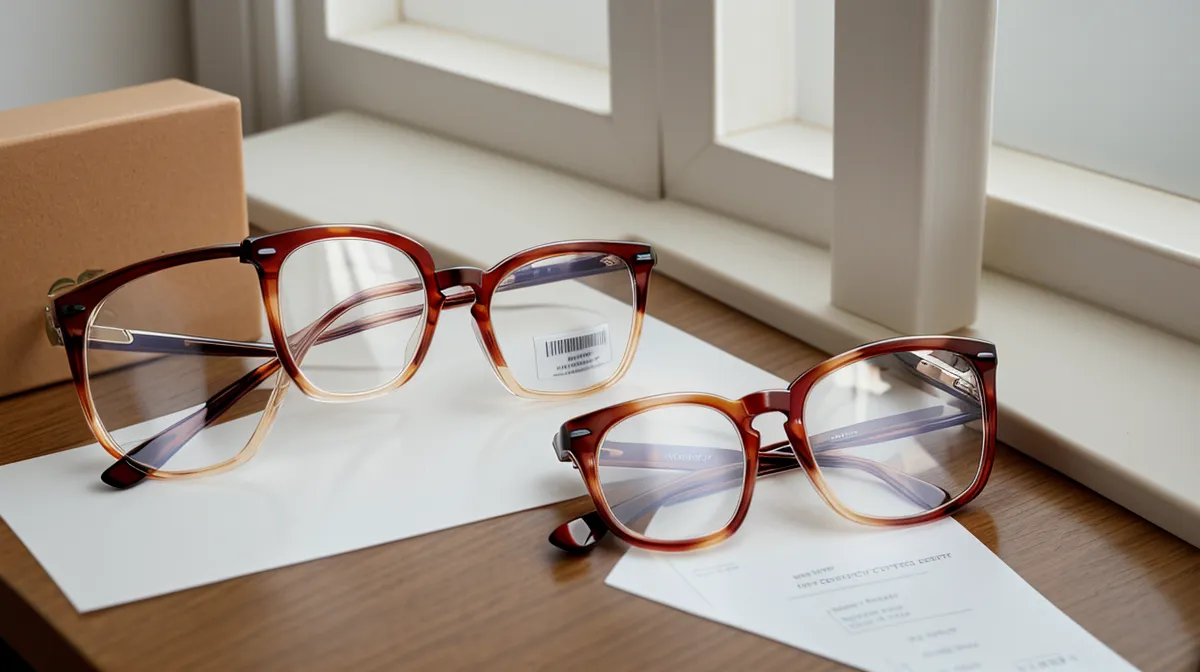
Twelve boxes of daily disposable contact lenses arrived in one shipment, and running the actual math on the bulk savings took longer than reading the boxes themselves. My prescription sits close to a -5.00 sphere with a stubborn edge of astigmatism, the kind of prescription where a contact lens bulk order looks simple in the marketing email and turns out to be anything but once you check the numbers against vision insurance and your own order-tracking log.
Quick disclosure before any of that math: a few of the shops and vision platforms linked in this piece pay me a commission if you order through them, at no extra cost to you. That commission doesn't buy a listing here — a shop only stays linked after surviving my running order log, the one I started keeping after a chain optical counter quoted me close to five hundred dollars for basic lenses I later found direct for around one-thirty. Forty pages into a manuscript edit past midnight is usually when my eyes start telling on me, dry and gritty by page thirty. The nights it doesn't happen are the ones that tell me the box in the drawer is worth reordering by the dozen.
The Real Math Behind a Bulk Contact Lens Order
A high-myopic prescription that needs steady correction for screen work makes stocking up tempting, and six- or twelve-month increments are where shops like ContactsDirect apply their steepest per-box discounts, steep enough that the smaller weekly cost starts to look almost embarrassing by comparison. None of that math means anything until the replacement schedule printed on the box gets translated into an actual box count for a full year of wear. Dailies, monthlies, and an occasional screen-only rotation don't divide into twelve months the same way, and a shop's bulk-savings banner is just marketing copy until that conversion is run against your own wear pattern.
The other number worth confirming before a dozen boxes ship is printed on the box itself, not the checkout page — base curve and diameter, checked against the prescription card every time, because bulk quantities are the hardest thing in this whole category to return. A mismatch on box one is a mismatch on box twelve, and a state-mandated prescription validity window means there's no reordering your way out of it if your numbers shift first. A misaligned lens reads like a missing serial comma in a manuscript: nothing announces itself, the page just feels subtly wrong, and your eyes pay for it by the end of the day.
Where Does the Insurance Math Actually Pay Off?
Testing the "instant insurance" claim at ContactsDirect for a bulk order was the point where the math stopped being theoretical. Most shops make you pay full price upfront and fight your insurance provider for reimbursement afterward, a process with more paperwork than a freelance contract, so I logged in, entered my vision plan details, and waited to see if the site could skip the PDF uploads entirely.
The green "Insurance Applied" text at checkout, with no document upload required, is a rare case of an interface actually respecting the time it's asking for. Out-of-network reimbursement usually means paying the full box price and hoping the paperwork clears weeks later, so having the benefit calculated in real time for a six-month supply of dailies felt like the exception rather than the rule. It's a cleaner workflow than what I've had at PerfectLens, though PerfectLens still earns a spot in my rotation for smaller emergency batches, mostly because bulk pricing there is bundled with a subscription and the auto-pause clause is actually written into the terms instead of buried somewhere you find it only after a year of boxes has already been charged to your card.
Confirming Fit Before a Dozen Boxes Ship
One thing I've learned to insist on before any bulk order is a trial pair, since my cylinder and axis numbers drift slightly from one exam to the next and a twelve-month commitment without a test run is a gamble no discount is worth. Toric lenses built for astigmatism are fitted more precisely than a standard spherical lens to begin with, so a trial pair matters even more once that extra correction is part of the prescription.
A wide pupillary distance can complicate fitting further, at least on the glasses side. My friend Ambrose Galloway, a school librarian in Davis, spent years getting stuck at in-store optical counters because his PD sits well outside what a standard frame display accounts for, which is part of why he orders online now, where PD is a number he types in rather than a guess a stranger makes across a counter.
Before I trust any bulk quantity of contacts, I run the same trial-first test on frames. A backup pair ordered through EyeBuyDirect was mostly about their 1.67 high-index upgrade, one of the more affordable versions of that lens type across every shop in my log, and when it arrived I held the finished pair up to the window, running a fingertip along the beveled edge to check the polish before trusting the prescription ground into it.
Costco Optical was the alternative I priced out first: the quote came back with a three-week wait for progressives and no stock of the toric brand my astigmatism needed, which ruled it out for anything beyond a basic pair of readers.
The Order Log Is What Keeps the Savings Real
Keeping that order log honest is most of the work once the boxes actually arrive: batch numbers, expiration dates, and whatever shipping delay pushed the delivery date, recorded before anything goes in the drawer. That habit started after a refund case dragged on for weeks because I couldn't produce the original shipping date, and it's the same log I check against every prescription before confirming that what's on file with a shop still matches the card in front of me. Prescription verification isn't an eye-exam formality here, it's the thing standing between a bulk order and a drawer full of lenses that legally can't be used.
A walk through the rose garden at McKinley Park in East Sacramento is the one stretch of my week with no screen in front of me, and it's usually when I remember to check whether a subscription auto-shipped without anyone's approval. Reyna Gutierrez, who I know from a Sacramento-area vision-care community online, texted me mid-rant about exactly that not long ago, the kind of message where she drops into Spanish the second a retailer's chat support starts stonewalling her, after a shop renewed her order without asking first.
For the deeper breakdown of how I actually use vision insurance against a ContactsDirect order, there's a full walkthrough in Using Your Vision Insurance at ContactsDirect for Online Orders, and the wider comparison across every shop in my log is in the best places to buy contacts. Bulk buying only makes sense when the prescription is stable and the insurance is actually going to cooperate. Check the RX expiration date first, and if there's less than six months left on the card, wait for the next exam before committing to a year of boxes.
If your own numbers are steady and your plan integrates the way mine did, the current bulk rates at ContactsDirect are worth checking against whatever's still sitting in your drawer before you reorder anything else.