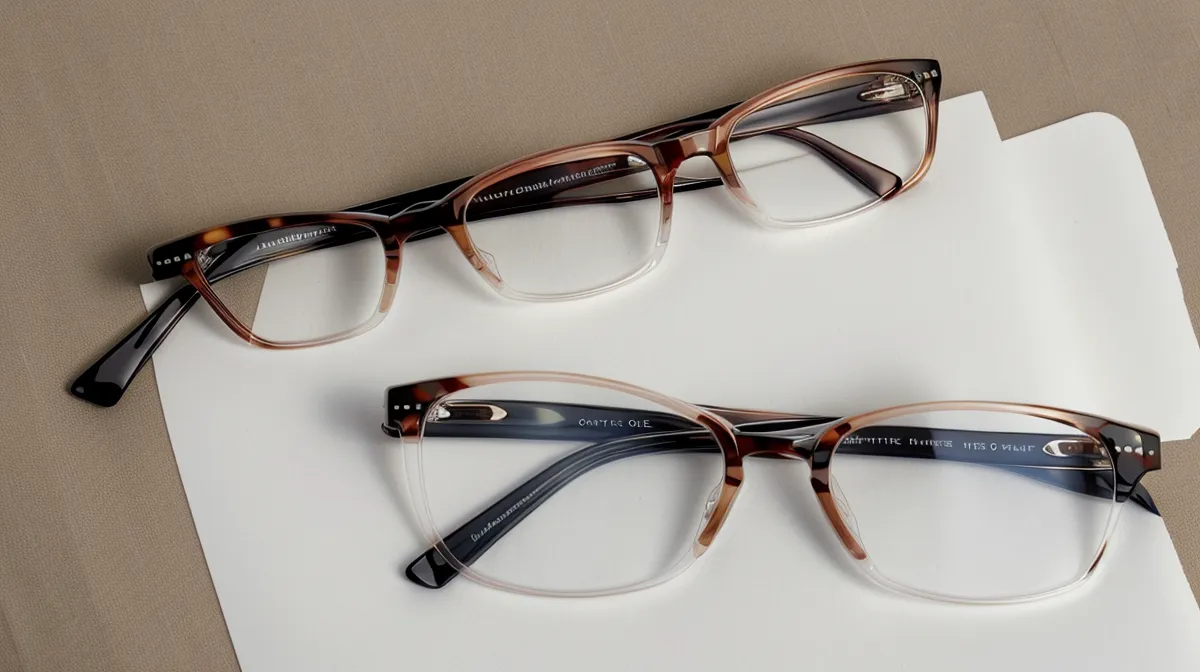
Eight months, zero scratches, one lens coating that still beads water like it did the day the mailer showed up. That's the line in my order spreadsheet that finally pushed me to write this entry. The pair is a 1.67 high-index set from Yesglasses, ordered last November for my -5.00 prescription with a touch of astigmatism, and it's the first pair in seven years of buying glasses online that hasn't shown a single flaw by month eight. As a freelance copyeditor, I notice flaws for a living, so that's not a small claim.
Online glasses shopping is not glamorous. Back in 2019, a chain optical store quoted me close to five hundred dollars for basic 1.67 lenses, and when I found the same materials direct for around one-thirty, I started keeping a running record of every order: which shop, when it shipped, what the listing promised against what actually showed up. Before I even try a new pair on, I check the PD number and the lens material printed on the invoice against my own RX card. That habit has caught more mistakes over the years than any coating spec ever will.
A -5.00 prescription with astigmatism is solidly high-myopic territory, and it practically forces the index question. I go with a 1.67 refractive index over the thinner options because the edge thickness stays manageable without ballooning the price — that's a whole separate rabbit hole and not the one this entry is about. What matters here is what happens on top of that lens: the coating stack, specifically the anti-reflective and oleophobic layers Yesglasses used on this pair.
A Stronger Prescription Makes Coating Choice Non-Negotiable
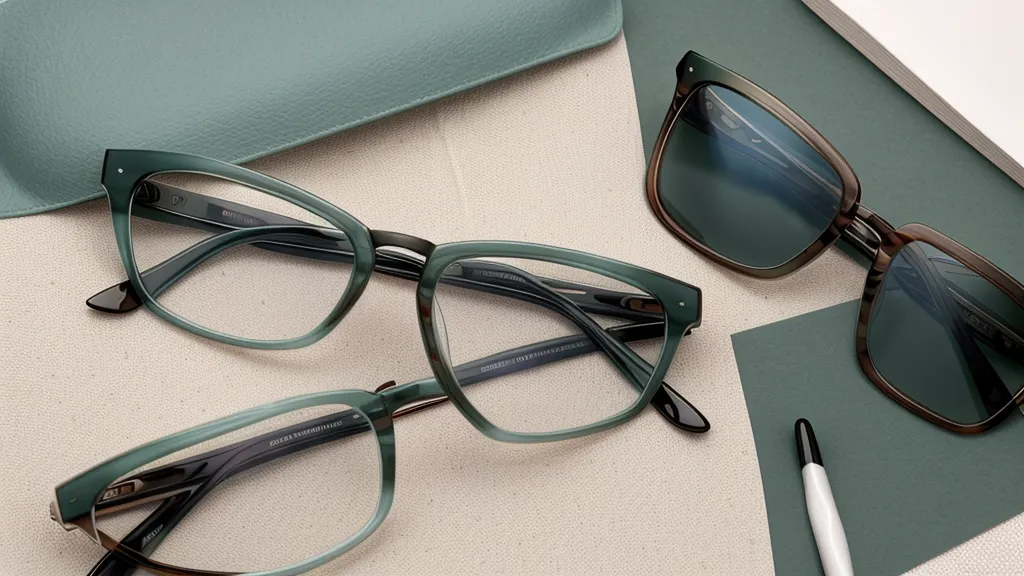
Higher-index material bends more light, and it also reflects more of it straight back at you. Without a strong AR coating, a 1.67 lens can look like a mirror that's slightly out of focus. Most people picture a lens coating as one film, but it's closer to a stack of polymer layers tuned to cancel specific wavelengths through destructive interference. On this Yesglasses pair, the reflection off my monitor doesn't come back as the bright white flare I got used to in my old backups; it reads as a faint seafoam tint, because the coating pushes the reflected light away from the range (somewhere around 555 nanometers) where the eye is most sensitive. The glare doesn't so much disappear as stop registering.
That difference showed up fast on the job. Somewhere around a four-hundred-page technical manual in January, staring at a white document window for most of a workday, I noticed I wasn't rubbing my eyes by hour four the way I used to in the old frames. Less internal reflection apparently means less work for your brain filtering it out. Less filtering means you can hold focus long enough to catch a missing comma at five in the afternoon instead of two.
How the Oleophobic Coating Survives Five Months in a Laptop Bag
By month five, most of my past online pairs start showing what I've taken to calling "grit" in the spreadsheet notes — you wipe a fingerprint with a microfiber cloth and just smear the oil around instead of lifting it off. That's the oleophobic layer failing, and it usually goes gradually, the way a detergent's fabric-softening claim quietly stops holding up somewhere around wash twenty even though the bottle looks exactly the same. If you've spent any time choosing eyeglass frames for high myopia to hide thick lens edges, a greasy lens is the last thing you want drawing attention to the exact edge you were trying to minimize.
My Yesglasses pair, ordered late November, is still beading water like it just came out of the box. They've ridden around loose in my laptop bag through most of pollen season, which is not something I'd recommend but is exactly how I stress-test durability. By week ten I'd started deliberately skipping the spray cleaner some mornings just to see how long the slickness would hold, and it kept holding. Three months in, I remember holding the right lens up to the kitchen light hunting for the first hint of residue fog at the edge, and there wasn't one — clear as the afternoon the case first arrived. One triple-digit day in June, I realized I hadn't deep-cleaned them in almost a week; a dry wipe with the cloth that shipped in the box was still enough to clear the surface.
None of this means every part of my order history goes smoothly. That same week, I gave up on 1-800-CONTACTS entirely — twenty minutes hunting through their site for the auto-renewal cancel button before I closed the tab and called my card issuer instead. I snapped my monthly lens case shut for the night right after, that small resistant click the only satisfying part of the whole errand.
The Temperature-Swing Test Every Lens Coating in Sacramento Has to Run
Here's the part of my spreadsheet that surprised me most: pricier doesn't reliably mean tougher. Several multi-layer AR coatings I've tracked over the years crack faster than basic ones, especially anywhere the temperature actually swings hard — and Sacramento swings hard, sixty degrees at sunrise and a hundred five by mid-afternoon on plenty of summer days. The lens material and the coating layers expand at different rates. When the bond between them is too rigid, you get crazing: fine spiderweb cracks that look like a smudge you can never quite wipe off.
It's the optical equivalent of a corrupted file: the data is technically still there, but you can't use it cleanly. I've had pairs from other shops go this way inside six months. This 1.67 pair from Yesglasses hasn't shown a hint of crazing, which tells me whatever bonding process they use flexes with the plastic instead of fighting it. That's a detail no spec sheet mentions, but it matters if you're shopping for best prescription sunglasses for driving with a high prescription anywhere near Central Valley heat.
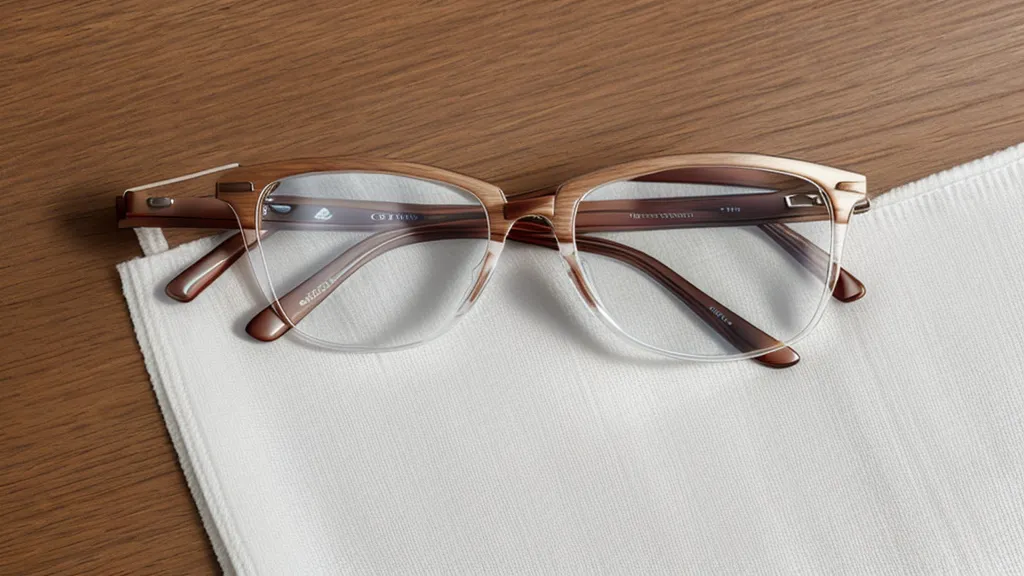
When I compared the listing photo to what actually showed up in December, the tint read more neutral than the amber I'd braced for, which was a relief. Some coatings shift your color perception just enough to throw off how you judge a page layout, and that's a problem when judging layout is the job. UV protection is rated to the usual 400-nanometer standard, and the color stays neutral enough that I trust what I'm seeing on a proof. My friend Ambrose, who's never been able to wear contacts and has worn glasses about as long as I have, asked me last month which coating actually survives daily wear. For him it's the one variable that matters, since frames are the only option he's got.
Reading the Spreadsheet After Eight Months
Most coating failures I've logged turn out to be user error rather than a bad batch — dish soap with degreasers, or wiping a lens on the hem of a cotton t-shirt that's shedding microscopic fibers you can't see. If you're wondering how to clean prescription glasses without damaging lens coatings, the boring answer wins: a dedicated lens spray and whatever cloth shipped in the box, used consistently. Eight months of outdoor walks between editing sessions in, and there isn't one scratch on this pair, which says more about the coating than about my own carefulness.
Checking the spreadsheet again, the value case is straightforward. When I paid around one-thirty for this pair, I was hoping for a year of daily wear as my primary glasses. They've already outlasted the five-hundred-dollar retail pair from 2018, whose coating started peeling like sunburn by month seven. None of that makes the Yesglasses coating a marketing bullet point. It's just a layer that's held up under a Sacramento summer and a heavy editing schedule without asking for anything in return.
If there's one line worth copying into your own order notes, it's this: judge a coating by the month-five friction test and by how it survives your own climate's temperature swings, not by the price on the listing page or how shiny it looks in the product photo. The pair that's still clear at week ten and still beading water at month eight earns the spreadsheet entry. Everything else is just a photo on a listing page.