Two refund cases inside six months, and only one of them needed me to pick up the phone. The other closed by email, a photo, and three business days, no argument required. Both went through ContactsDirect, the subscription contact lens service I've been running my high-myopia prescription through since a bad chain-store quote scared me off trusting an in-store counter years ago, and the gap between the two cases is the whole reason I think most people misread how a contact lens refund, or a vision insurance credit, actually works when you're ordering contacts online instead of walking up to a counter.
A quick disclosure before the tracking notes: some of the shops named here, ContactsDirect included, pay a commission if you order through a link on this page. That commission never touches what lands in my running spreadsheet, the one I've kept since 2019 logging every optical order, what the listing promised, and what actually showed up in the mailer. A chain optical counter once quoted me close to five hundred dollars for basic 1.67 high-index lenses; I found the identical lens elsewhere for around one-thirty. That gap is why the spreadsheet exists, and why a refund policy gets logged with the same scrutiny as the lens coating.
The Myth: A Contact Lens Refund Isn't One Process
Here's the assumption I keep running into inside the Sacramento vision care group I've been part of online for a while: once something goes wrong with an order, a shop either refunds you or it doesn't, full stop. Reyna Gutierrez, who joined that same group after posting about a wrong-PD order disaster a few years back, still keeps her optometrist-measured pupillary distance on an index card kept separate from her Rx, because a site once treated the two numbers as interchangeable and got both wrong. That's a prescription-parameters mixup, not a refund dispute, but it comes from the same wrong assumption that vision retailers run one clean number through one clean process. They don't, and a contact lens subscription makes that obvious faster than a single frame order ever would.
My prescription is a steady -5.00 sphere with a touch of astigmatism, which is exactly the kind of order that tends to expose how many separate systems are actually running under the word "refund." A plain single-vision dailies order rarely backorders. A toric order does, regularly, because it depends on a narrower manufacturing batch. Once you add insurance into that mix, you've got three systems that only look like one from the checkout screen: the shipping and stock system, the damage and defect system, and the benefits system. None of them talk to each other, and none of them move at the same speed.
How the Insurance Order and Trial Pair Actually Shipped
The six-month supply I ordered went through with my vision insurance benefit applied automatically at checkout, no claim form, no PDF upload, just a zero balance once the system matched my name and birth year against the plan. Watching that happen felt almost suspicious after years of manual paperwork. I'd already written about why I wear daily contact lenses for travel and monthlies for home, and that replacement-schedule split matters here too, since a six-month "supply" order behaves differently at checkout than a single monthly-lens reorder does.
My friend Ambrose, a school librarian in Davis I've spent a couple of years quietly trying to talk into ordering his next pair of glasses online, texted asking whether the same instant-insurance trick works on frames. It doesn't. ContactsDirect is contacts only, and frame benefits at most shops still route through a slower, upload-your-card process, a different plan entirely, wearing a similar-looking checkout screen.
Before ContactsDirect shipped the bulk order, they sent a free trial pair, which mattered more than it sounds. If a corrective lens doesn't sit exactly right on a -5.00 eye, the edge-awareness becomes a constant, low-grade distraction, the kind that reads like a missing serial comma: nothing overtly wrong, just off. I knew the trial pair had the axis right on my walk to check the mailbox two doors down, when I could read the neighbors' house numbers without the usual half-second of squinting adjustment. That's a smaller, quieter kind of proof than a lab report, but it's the one that actually matters day to day.

The trial step is also where I'd point anyone making the jump from frames to contacts for the first time, which is most of what's in my tips for switching from glasses to contacts with high myopia notes. Skipping the trial and going straight to a bulk order is the single most common mistake I see reported in that same vision care group, and it's not a refund-policy problem so much as an impatience problem.
Why a Backordered Toric Brand Isn't a Refund Failure
Local options didn't hold up either. A Costco Optical quote for a set of progressives came back with a three-week wait and no stock of the specific toric brand I needed, ruling it out twice over in one visit. That's the kind of dead end that pushes a lot of high-myopia buyers back online in the first place, not brand loyalty.
The backorder notice for a follow-up toric order landed on my phone while I was unloading grocery bags in the parking lot at the Trader Joe's on Arden Way, and my first reaction was irritation, not alarm. Toric batches are manufactured in narrower runs than spherical ones, so a backorder on that specific brand isn't really ContactsDirect's failure; it's a supply-chain fact of ordering astigmatism correction instead of a plain lens. What actually determines whether this is a good or bad experience is what the shop does next, and here the notice came with a straightforward choice: wait for the batch, or cancel that portion and get credited. I chose the credit. It landed within three business days, no phone call, no escalation, just an email confirming the cancellation and a line item back on my card.
The Damaged-Box Case: A Photo, Not a Return
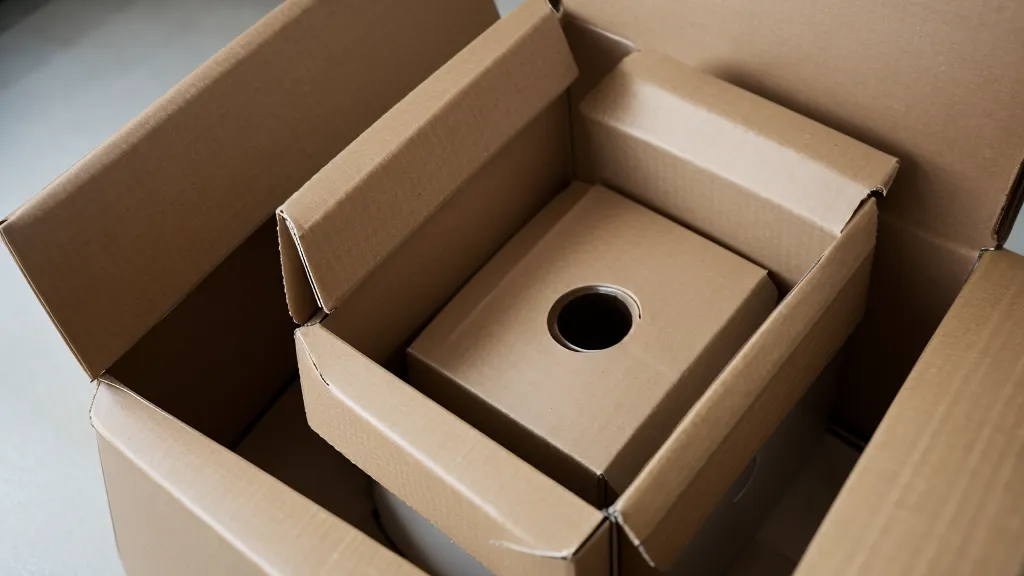
This one had nothing to do with backorders. A box of my standard dailies arrived with the outer shipping carton crushed on one corner, the individual blister packs inside untouched but the whole thing looking like it had been used as a step stool somewhere between Sacramento and the warehouse. I'm particular about the integrity of anything I'm putting directly on my eyes, crushed corner or not, so I flagged it the same afternoon.
Nobody asked me to ship the damaged box back, which surprised me. That's the part people assume works the other way around: pack it up, wait for a return label, wait again for the warehouse to log the return, then wait for the credit. Instead, ContactsDirect wanted one photo of the crushed carton and issued the credit off that image alone. Somewhere in that exchange I had the Rx card sitting on the desk for reference, that same stiff, waxy stock every optometrist's office seems to print on, the kind that never quite lies flat no matter how long it's been out of the drawer. Checking the parameters against it out of habit, even for a damage claim that had nothing to do with prescription accuracy, is just what happens after enough years of ordering.
Insurance Reimbursement Runs on a Third, Separate Track
None of the above touches the benefits side at all, which is exactly the confusion I opened with. A shipping problem, a damage problem, and an insurance problem are three different departments even when the same customer-service inbox answers all three. For readers whose plan doesn't sit inside a shop's network the way mine does with ContactsDirect, I've laid out how to order contacts with VSP out of network benefits online separately, and that manual, upload-your-receipt reimbursement process runs on its own timeline, disconnected from whatever a backorder or a damaged box is doing.
PerfectLens runs a comparable subscription model with its own auto-pause and skip-shipment control, useful context if you've ever tried to freeze a contacts order before a trip and couldn't find the button fast enough. Its catalog also skips same-day prescription verification for new accounts, a friction point that has nothing to do with refunds but shapes which shop you'd even test first. EyeBuyDirect's production timeline generally beats Yesglasses' ten-to-fourteen-day run, though Yesglasses puts a live optician on every prescription before it ships, which counts for more on a narrow bridge than on a fast delivery window. Lens-coating durability, the photochromic-versus-polarized question for outdoor prescription wear, and the lens-material and Abbe-value tradeoffs that matter most to high-index buyers are entirely separate comparisons from a contacts subscription, and so is a glasses return-and-remake window, which runs on lab timing a blister-pack refund never touches.
What to Check Before You Assume Any Refund Is Automatic
So here's the actual rule, the one I wish someone had handed me before my first backorder notice: before you commit to a subscription, find out whether the shop treats a backorder, a damaged box, and an insurance credit as three distinct processes with three distinct timelines. If support can't clearly tell you which of those tracks handles your specific problem before anything has even gone wrong, assume the slowest one applies once it does. A shop that answers that question well, the way ContactsDirect did twice in six months, is worth more than one that just advertises hassle-free returns without saying which hassle it's actually removing.
If your plan applies automatically the way mine does and you want to test the insurance-first approach yourself, that's the box below: same shop, same policy, currently the top score in my spreadsheet for handling friction without making me argue for it.
ContactsDirect
Pros
- ● Instant insurance benefit application at checkout
- ● Free trial pair shipped before bulk commitment
- ● Efficient refund processing for backorders and damage
Cons
- − Toric lenses occasionally face inventory lags
- − Subscription cost is higher than manual sale-hunting