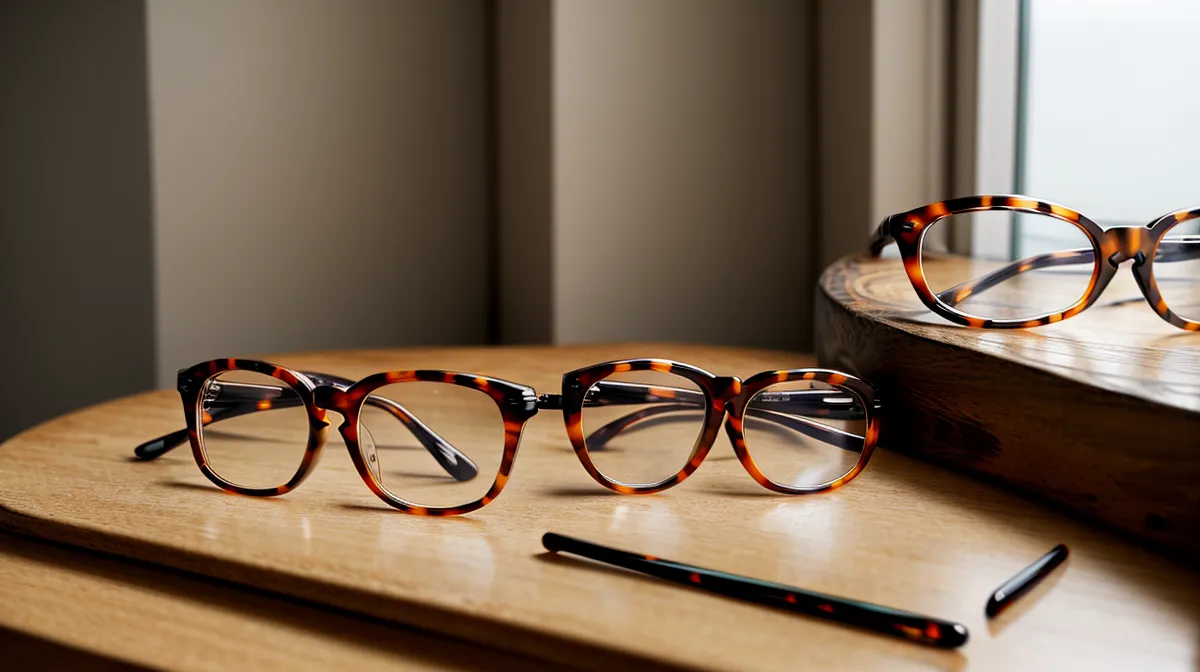
Zenni's anti-reflective coating on my tortoiseshell acetates started flaking within the first stretch of wear. The redo Yesglasses did on the same frames, months later, still hasn't picked up a single cloudy patch. Same pair of glasses, two labs, two different results. That gap is the reason I cross-reference lens-replacement orders in my running archive instead of just filing each one away. With high myopia, a lens's finish tells you almost as much as its power does.
Those are the frames I found stuffed in a desk drawer a while back, tortoiseshell acetate with a heavy rim, the kind of frame that flatters a -5.00 prescription instead of fighting it. A chain optical store quoted me close to five hundred dollars for basic 1.67 lenses when I first started shopping around online back in 2019. I found the same lens material direct for around one-thirty, which is why lens-only replacement — basic eyewear maintenance instead of buying new frames every time a coating gives out — stayed on my radar. Sending a frame you like into the mail is a different kind of risk than a fresh order, though. The money is smaller, but if a lab damages the frame during the heat-insertion step, no refund gets you that exact acetate back.
Two Online Optical Shops, One Lens-Replacement Job
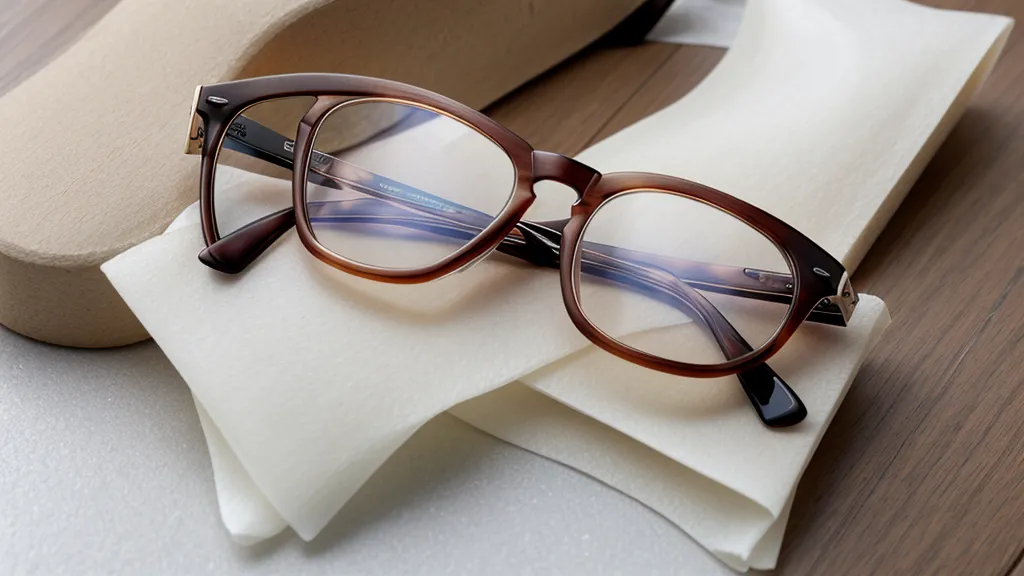
Zenni got the frames first. Filling out their replacement portal meant entering the frame type — full-rim — plus my prescription numbers, then printing out my pupillary distance to tuck inside the box, the same 63mm figure I check against my original RX card before every order, online or in person. I asked for 1.67 high-index plastic on both attempts, mostly because at my sphere power anything thinner starts looking like it was poured rather than ground; the actual percentage difference is its own topic, but the short version is that the switch keeps a heavy bridge wearable. My astigmatism isn't severe enough to make toric fitting the deciding factor in a lens order, though it's exactly the kind of variable that would tip me toward one lab over another if it were. Neither shop asked me to re-measure the frame itself. I'd already logged the bridge and temple width from the original fitting, and both portals took those numbers without a follow-up question.
Both labs verified the prescription against the numbers already on file before cutting anything, a more careful check than I've gotten on some new-frame orders. It's part of why I keep circling back to finding cheap designer glasses online without paying retail as a strategy: you're bypassing the most marked-up part of the transaction, the frame itself, and paying only for the parts that actually determine whether you can see. Replacement-only orders take that logic one step further. No frame charge at all, just labor and glass.
What Came Back in Each Box
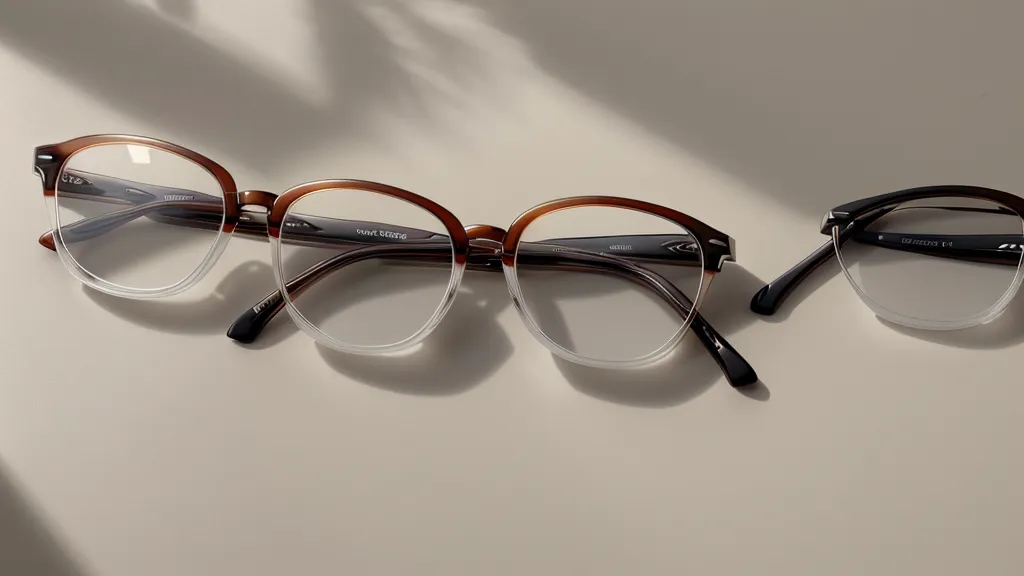
Yesglasses' box came back in about ten business days, fast given the cross-country shipping involved. Zenni's took noticeably longer and arrived without the small velvet pouch that's supposed to ship with every replacement order — a detail I only noticed because I log accessories along with everything else. Return-and-remake windows differed too. Yesglasses gave me more time to flag a problem and send the frame back before the window closed, while Zenni's was shorter, which mattered less in the end than I expected once I saw how each pair actually sat on my face.
Laid side by side, the lens thickness was close enough that I couldn't tell which lab had done which pair just by looking; both landed near a set of 1.74 ultra-high-index lenses I'd bought the year before, where the extra cost bought a fraction of a millimeter and not much else. The optical centers told a different story. Yesglasses matched my 63mm PD exactly, no swimming sensation when I put them on, while the Zenni pair sat close but not quite dead center, enough that I noticed it on long editing days before I noticed the coating. I've seen the same gap between listed specs and what actually ships when I wrote about what I noticed about fast shipping when ordering contacts online — the logistics side of these companies is often more reliable than the fitting side.
The Coatings Didn't Age the Same Way
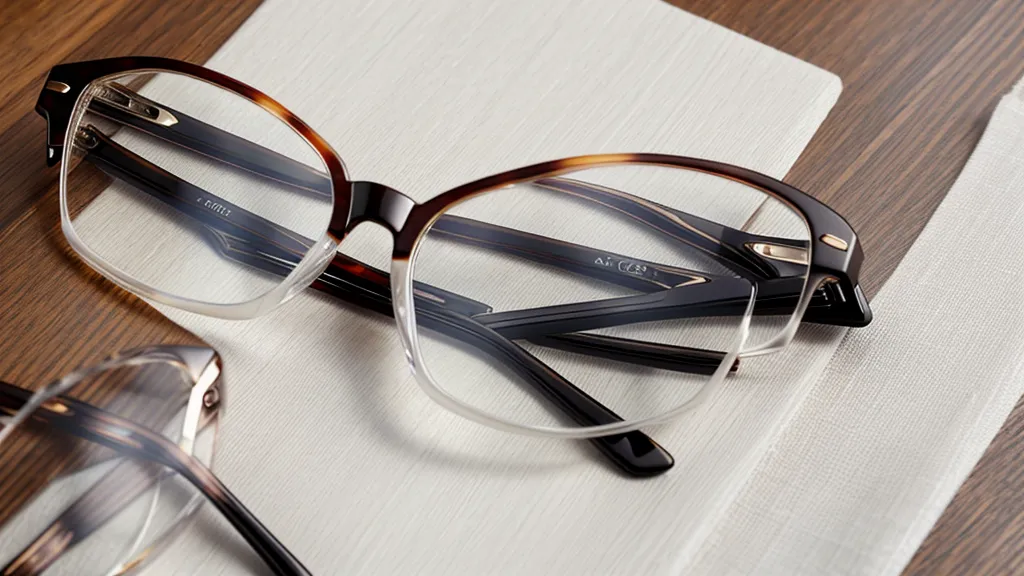
Part of the gap probably comes down to how each lab handles a frame it didn't design. Shops that sell their own house frames have the digital blueprint on file, so the cutting machine already knows the curve and bevel it's working with. Send in an outside frame, tortoiseshell acetate included, and the lab has to trace it digitally before anything gets cut. A flatter, standard frame like mine is a relatively easy trace; a high-curvature or wraparound style would ask more of that same software, which is roughly the problem I ran into wondering whether photochromic lenses for high myopia are worth it for outdoor use — the more variables you stack onto a lens order, the more chances an automated system has to get one of them slightly wrong.
Coating durability is really its own subject, and not one I'll try to fully unpack here, but the practical difference felt like the gap between a detergent that holds color through a dozen washes and one that fades everything to gray by the fourth. The Zenni coating on that first replacement started flaking within months, well before any coating I've paid for has ever given out that fast. The Yesglasses redo, on the same frames, is three months in without a single scratch or cloudy patch — not a guarantee it holds forever, just the best data point I have right now.
Choosing a Lab for a Frame You Actually Like
Most of this comparison happened at my desk in the alcove by the window, notebook open to this year's order log, both pairs sitting on a lens cloth at the edge while I typed notes under the task lamp. Daisuke, a fellow editor from my freelance collective who I meet up with for the occasional coworking morning, asked why I was tracking shipping ETAs for glasses with the same rigor he applies to manuscript deadlines. Fair question. The honest answer is that eyewear orders and contact lens orders live in the same archive for me, and the instincts overlap. Pausing a contacts subscription without losing the loyalty discount is a different kind of paperwork than a frame replacement, but the rule is the same: read the terms before you click confirm. None of this qualifies for out-of-network reimbursement through insurance, since a replacement-only order rarely itemizes the way a full exam-and-glasses visit does. It's a simpler exchange than reading a contact lens prescription's base curve and diameter line by line, at least, and frames don't run on the fixed replacement schedule contacts do — nobody's making me reorder every two weeks — which is part of why these sat in a drawer as long as they did before I dealt with them.
If I already trust a shop, because I've ordered new frames from them before and know how they handle a prescription, sending an existing pair in for lens-only replacement is close to a strict upgrade over buying new: no frame markup, and a lab that already has my numbers on file. For a shop I've never used, I'd send a backup pair first, not the frames I actually care about, until I've seen how their software handles a frame it didn't design. Zenni might do fine with someone else's acetate. Mine just wasn't the test case I'd choose again. The frames are back in my regular rotation either way, coating intact for now, notebook updated, and that's about as much closure as an eyewear archive ever gives you.