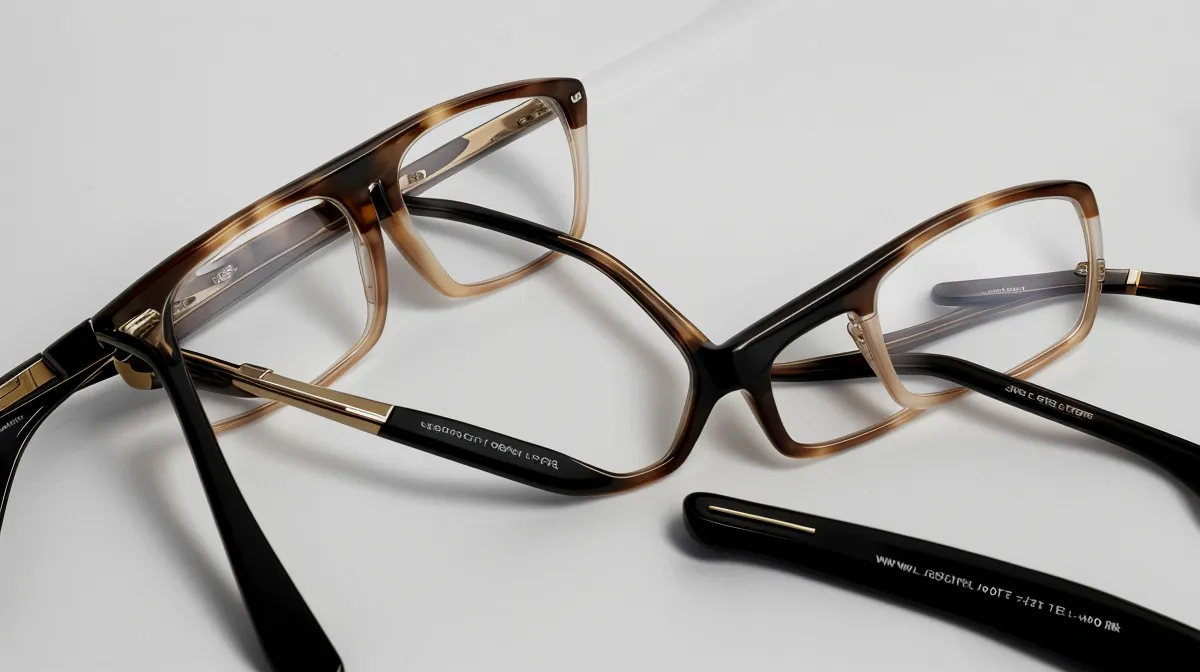
Which number should worry you more when you're about to click "place order" on a new pair of glasses: the pupillary distance every online optician asks for, or the axis number buried lower on the same form? For anyone whose prescription is just nearsightedness, the question barely matters. For astigmatism correction, it's the difference between glasses that read like a clean page and glasses that read like a paragraph with the kerning off. I've ordered online eyewear long enough to trust my own running log over a listing photo, and the log says prescription accuracy for a toric lens depends on details most high-index lens buying guides skip entirely.
What Actually Goes Wrong When Astigmatism Meets a Web Form?
A prescription with only a sphere number is forgiving. Round the power to the nearest quarter diopter, get the PD close enough, and a decent lab will still produce something wearable even if the fit isn't ideal. Add a cylinder and an axis, and that margin collapses, because the lens now bends light differently along two perpendicular meridians instead of one; get the orientation wrong by even a few degrees and the whole image tilts. That risk sits apart from the high-index conversation most buying guides lead with. 1.67 high-index material keeps the edges thin on a -5.00 sphere like mine, a step up from the basic frames a chain store once quoted me close to five hundred dollars for, but a thin lens ground to the wrong axis is still a wrong lens.
My neighbor who kayaks most weekends on the Sacramento-San Joaquin River Delta doesn't think about any of this. His prescription is mild and purely spherical, so he buys polarized prescription sunglasses in bulk online and shrugs off losing a pair overboard now and then. Mine is not that kind of order. Every pair I buy needs the axis to land within a couple of degrees of what's on my RX card, or the edges of the world tilt the way a page reads off when a comma lands in the wrong place.

Toric Lenses Aren't Just a Rounded-Up Sphere Correction
A toric lens isn't a regular lens with extra power tacked on. It's ground with two different curvatures set at a specific angle to each other — one addressing the astigmatism, one addressing the general near- or far-sightedness — and the axis number is the instruction that tells a lab where to align that second curvature relative to your eye. Get the sphere wrong and the whole world goes soft. Get the axis wrong and the world stays sharp in patches while bending everywhere else, with vertical lines leaning and straight door frames curving, and the effect gets worse as the cylinder power climbs. Fitting a toric lens correctly also means checking that the frame won't let the lens rotate once it's mounted; a loose temple or a frame that slides down the nose can twist a perfectly ground correction out of alignment after the fact.
Most U.S. optometrists write cylinder power in minus notation, and axis as a number between 1 and 180, a compass reading for where that second curvature sits rather than a strength value. A dropdown box on a checkout page doesn't know the difference. It just takes whatever digits get typed in and passes them to the edger, which is where two ordering approaches start to diverge, because not every shop treats that number with the same suspicion I do.
Reading Vertex Distance Before You Trust a PD Number
Vertex distance is the gap between the back of the lens and the front of the eye, and it matters more for a toric correction than most buying guides admit. Push the frame forward on the nose, or let it ride too close to the lashes, and the effective power of that cylinder shifts even when the axis was ground exactly to spec. I test a new pair outdoors before trusting the listing photo. A walk around Curtis Park in South Sacramento shows up peripheral blur or tilt that a bathroom mirror never will. While I've written about how to measure pupillary distance for online prescription glasses, a cylinder in the prescription raises the stakes further, since the correction is directionally sensitive and a lateral shift of a millimeter can nudge the whole axis out of true — which makes PD accuracy matter even more than that piece lets on.
Verified Upload vs. Dropdown Entry: Two Paths to Prescription Accuracy
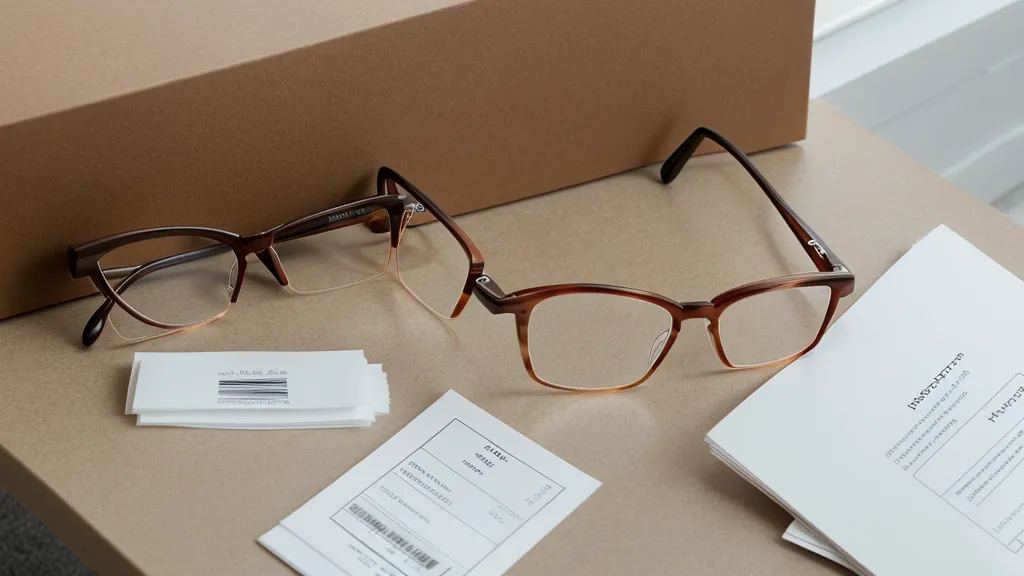
One ordering path lets you upload a photo of the actual RX card instead of retyping cylinder and axis into a form built for simple sphere corrections. A pair I ordered from Yesglasses came through this path. Turning that frame over in my hand under the monitor, the polished acetate catches the light in one clean line instead of a scattered smear, and the anti-reflective coating still wipes clean without the hairline haze cheaper coatings pick up. It's a small detail, but it tells me the lab wasn't cutting corners on the parts I can't see either. Verifying a prescription this way is closer to how buying contact lenses online after getting an in-person eye exam works, where the packaging itself is standardized enough that a mismatch is hard to miss; glasses give you no such built-in check, so the shop's own verification step is the only backstop you get. Shops that build in that step also tend to be among the best high index lenses for strong prescriptions I've found, which starts to matter once your sphere passes -4.
The other path is a plain dropdown form on a no-name overseas site, no upload option, no confirmation email showing what was actually entered. I tried that route once for a cheap backup pair, and the PD came back off-center in both lenses; the frames also arrived two weeks past the delivery date the listing promised, which left no time to reorder before I needed them. Nothing about that shop was dishonest exactly. The checkout just wasn't built for a prescription with an axis in it, and it showed.
The Trade-Off Comes Down to How Much Risk You Can Tolerate
Choose the upload-and-verify shops when your cylinder is anything beyond the smallest correctable amount, when the frame you want sits close to the face, or when a lens has looked fine in the box and felt wrong on your nose within a day before. Choose the cheaper dropdown-only sites when the prescription is spherical only, or when it's a low-stakes backup pair you won't mind reordering if the fit misses. My own record favors the first group for anything astigmatic and saves the second for sunglasses I don't wear daily.
None of this touches contact lenses directly. Reading a contact lens prescription's base curve and diameter is a different skill from reading CYL and axis off a glasses RX card, and choosing between daily and monthly replacement schedules is a wear-cycle question, not a fitting one. A reader named Fletcher Nwankwo, who reorders lenses by the dozen despite a fairly mild prescription, once asked whether pausing a subscription before a trip would cost him a loyalty discount; fair question, but it belongs to the contact lens side of my archive, not the frames side. Out-of-network reimbursement for a toric lens order adds its own paperwork on top of all this, and none of it changes a single number in the axis math above.
So which number should worry you more, PD or axis? Both, but only if the shop handles the axis with the same suspicion you'd want applied to the PD. A lab that grinds a toric lens correctly and mounts it at the right vertex distance will beat a perfect PD paired with a careless axis every time. That's the whole comparison, distilled to one line I'd hand my neighbor if he ever traded his spherical prescription for something more complicated: match the ordering method to the correction you actually have, not the one that's easiest to type into a form.