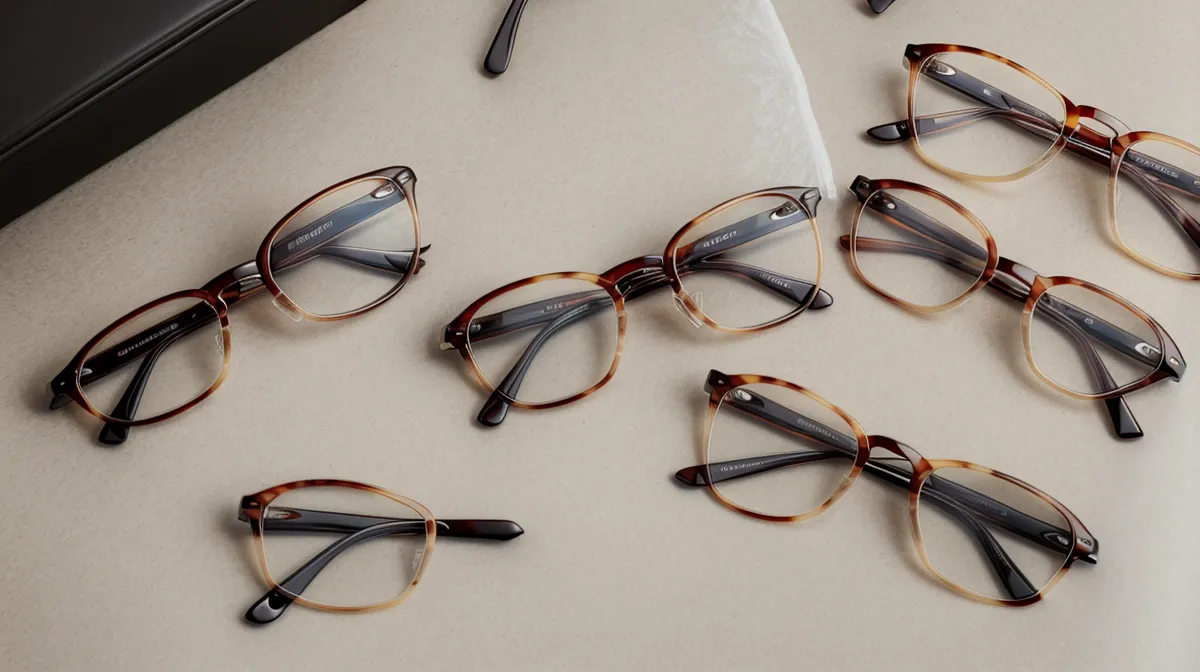
Late one evening in mid-February, I sat at my desk in Sacramento, squinting at the fine print of my running eyewear spreadsheet. The fluorescent light hummed in that specific way that makes a -5.00 prescription feel like it’s struggling to keep up. I was auditing my records when I realized two things: my VSP benefits were set to expire by the end of the quarter, and my current backup frames—the ones I wear when my dailies start to feel like sandpaper—had a scratch right across the optical center of the left lens. It was like a permanent typo I couldn't delete. I needed a new pair, and I wasn't about to head back to the mall optical chain that once quoted me close to five hundred dollars for basic high-index lenses.
I’ve been tracking my optical orders since 2019, logging every PD measurement, frame width, and lens material. My spreadsheet is a graveyard of retail markups I refused to pay. I knew EyeBuyDirect offered the 1.67 high-index lenses I need for around one-thirty, but I had never bothered to figure out the insurance side. Most people assume that if there isn't a 'Sign in with VSP' button at checkout, the benefit is lost. That is a costly assumption. For someone with my level of myopia, leaving insurance money on the table is like ignoring a missing serial comma in a thousand-page manuscript; it’s an error that haunts the ledger.
The Out-of-Network Reality Check
Early March arrived with the kind of persistent Valley rain that makes you want to stay inside and optimize your finances. I logged into my VSP portal to check my out-of-network frame and lens allowance. Here is the reality of online shopping with vision insurance: EyeBuyDirect is considered an out-of-network provider for VSP. This means you won't see your discount applied in the shopping cart. You pay the full price upfront, and then you ask for your money back. It sounds like a chore, but for those of us who have spent decades being overcharged for 'premium' lens coatings, it’s a standard operating procedure.
I remembered thinking: even with the out-of-network hassle, I'm still saving hundreds compared to that mall optical shop quote. A typical in-network allowance might give you $150 toward frames, but when the shop marks those frames up to $300 and charges $250 for 1.67 lenses, you’re still out of pocket for a significant amount. At EyeBuyDirect, my total for frames and high-index lenses usually hovers around $140. Even if VSP only sends me a check for $50 or $70, the net cost is still drastically lower than the 'discounted' retail price. It’s a math problem that always favors the spreadsheet-literate.
Step 1: Procurement and the Itemized Receipt
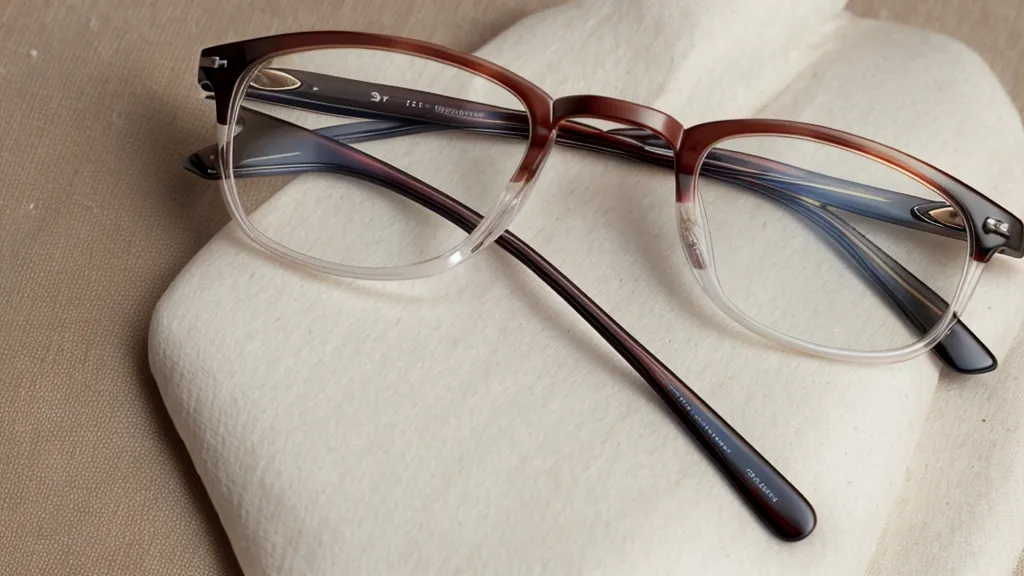
Ordering the glasses is the easy part, provided you know your numbers. Since my astigmatism requires a specific cylinder and axis, I double-check my entries three times before clicking buy. I chose a pair of acetate frames and opted for the 1.67 high-index material. For a -5.00 sphere, 1.67 is the sweet spot; it’s thin enough to avoid the 'coke-bottle' look without the exorbitant cost of 1.74 lenses. If you’re curious about why I’m so picky about the material, I’ve written before about why I switched to online shops for 1.67 high index lenses.
Once the order was placed, I didn't just close the tab. The most critical piece of this process is the itemized receipt. VSP won't accept a simple 'Order Confirmed' email. They need to see the breakdown. I waited for the shipping confirmation in early March, then went into my EyeBuyDirect account to download the 'Invoice.' An insurance-ready receipt must show the frame cost, the lens cost, and any coatings as separate line items. It also needs the shop's name and address. EyeBuyDirect is good about this; their invoices usually include the necessary HCPCS codes that insurance adjusters look for, though sometimes you have to look closely to find the NPI number if VSP asks for it.
Step 2: The VSP Manual Claim Portal
After about two weeks, my new glasses arrived. I performed my usual ritual: checking the lens alignment against my old pair and verifying the refractive index by looking at the edge thickness. Once I was satisfied that the 'page' felt right—no optical typos or misaligned progressives—I pulled out my 10-digit VSP member ID. I had already logged the delivery in my spreadsheet, feeling the cool, smooth texture of my spreadsheet-tracking notebook where I've logged every PD measurement and lens index since 2019. It’s my physical backup for a digital life.
I logged into the VSP website and navigated to the 'Claims' section. You have to look for the link that says 'Submit an Out-of-Network Claim.' This is where the manual labor happens. You’ll need to enter the date of service (the date you bought the glasses), the provider name (EyeBuyDirect), and then manually type in the costs for frames and lenses. It’s tedious, like copyediting a bibliography, but each field you fill in is essentially worth ten or twenty dollars of your own money coming back to you. I’ve found that how to order contacts with VSP out of network benefits online follows a nearly identical pattern, so mastering this for glasses makes the contact lens replenishment much faster.
Step 3: Uploading Proof and Waiting
One rainy afternoon, I finally hit the 'Upload' button on the VSP portal. I attached the PDF of my EyeBuyDirect invoice. This is the moment where most people fail—they upload a screenshot of their phone's order history instead of the actual invoice. VSP needs the document that looks like a bill. I made sure my 10-digit ID was clearly visible on my profile so there would be no reason for a rejection. The portal gave me a confirmation number, which I promptly copied into my spreadsheet next to the order date and the amount paid.
The waiting period is the dry part of the story. Unlike the instant gratification of a 'Buy One Get One' coupon, insurance reimbursement moves at the speed of a legacy publishing house. You won't see that money for weeks. But when the check finally arrives in the mail, or the direct deposit hits, it feels like a rebate for being diligent. In my case, the total cost for my 1.67 high-index backups was around $135. After VSP processed my out-of-network claim, I received a reimbursement for $70. My net cost for high-quality, high-index eyewear was $65. You simply cannot find that price at a brick-and-mortar store that accepts VSP in-network.
The Contrarian Math of Out-of-Network Benefits
There is a persistent myth that you 'lose' money by going out-of-network. People see that $150 in-network allowance and think they are getting a gift. They don't realize that the in-network provider has a contract that often dictates higher base prices. If an in-network shop charges $400 for a pair of glasses, your $150 allowance leaves you with a $250 bill. If EyeBuyDirect charges $130 for the same specs and you get $70 back from VSP, you’ve spent $60. The out-of-network path saved you $190 in actual cash. I’ll take the $190 over the 'convenience' of an in-network checkout any day.
This approach requires a bit of record-keeping, but as a freelancer, I’m used to tracking every billable hour and every deductible expense. Adding a few lines to a spreadsheet for my vision health is second nature. I’ve even kept my tracking notes from six months with ContactsDirect and navigating two refund cases, which taught me that whether it's glasses or contacts, the person who keeps the best receipts always wins. Using VSP at EyeBuyDirect isn't about a button; it's about the follow-through. It’s about ensuring that your prescription jargon—the spheres, the cylinders, and the high-index specs—are matched by a financial precision that keeps your bank account as clear as your vision.
By the time the early spring sun started hitting my desk in Sacramento, I had my new frames, a processed insurance claim, and a spreadsheet that balanced perfectly. The scratch on my old backups no longer mocks me, and I didn't have to pay a five-hundred-dollar retail ransom to make it happen. If you can read a prescription card, you can fill out a reimbursement form. It’s just another form of copyediting, and the payout is worth the red ink.