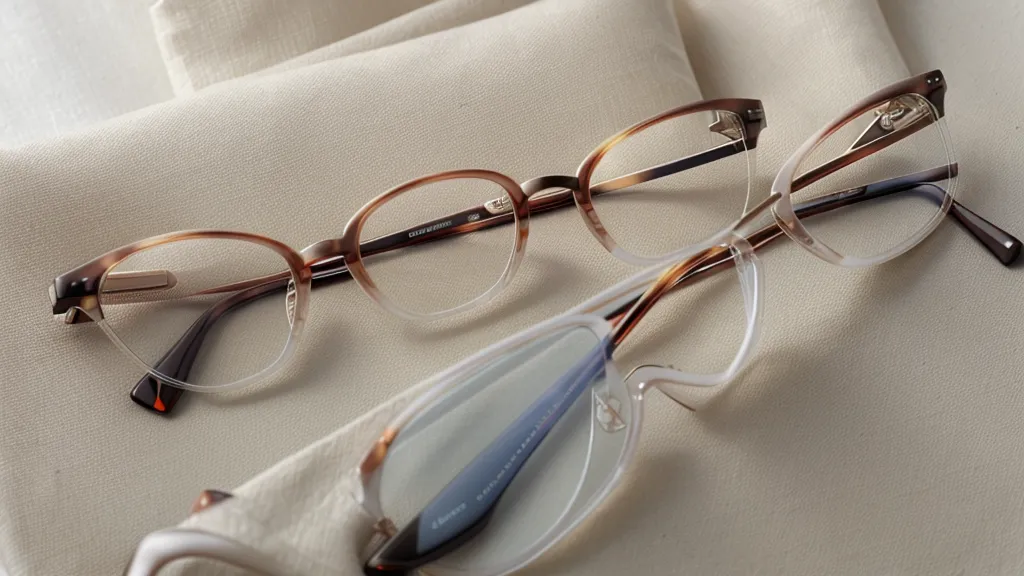
A frame tagged 'Small' on a shop's product page and a frame stamped 48-16-135 on the inside of the temple arm are making two different promises. One is a marketing category; the other is the only number that decides whether a pair of glasses actually stays on a small face without sliding into your cheekbones by lunch. My running record of online optical orders, going back to 2019, keeps confirming which one to trust when you're shopping a site like Yesglasses for high-myopia frames that fit a narrow bridge. This is the question readers ask me most: which measurements actually matter, and which ones are just packaging.
The Millimeters Behind Yesglasses' 'Small' Label
Start with what the label is hiding: 'Small' in most shop taxonomies means nothing more precise than 'probably fits most people who aren't average.' My spreadsheet, which tracks every lens index and frame measurement since a chain store quoted me close to five hundred dollars for basic 1.67 lenses back in 2019, said what I actually needed was a 48mm lens width, a 16mm bridge, and a 135mm temple. Go bigger than 48mm on my face and you get a coke-bottle effect at the edges no matter how good the index is. A wide frame also throws off pupillary distance alignment, pushing the thick part of a strong prescription further toward the temple than it needs to sit.
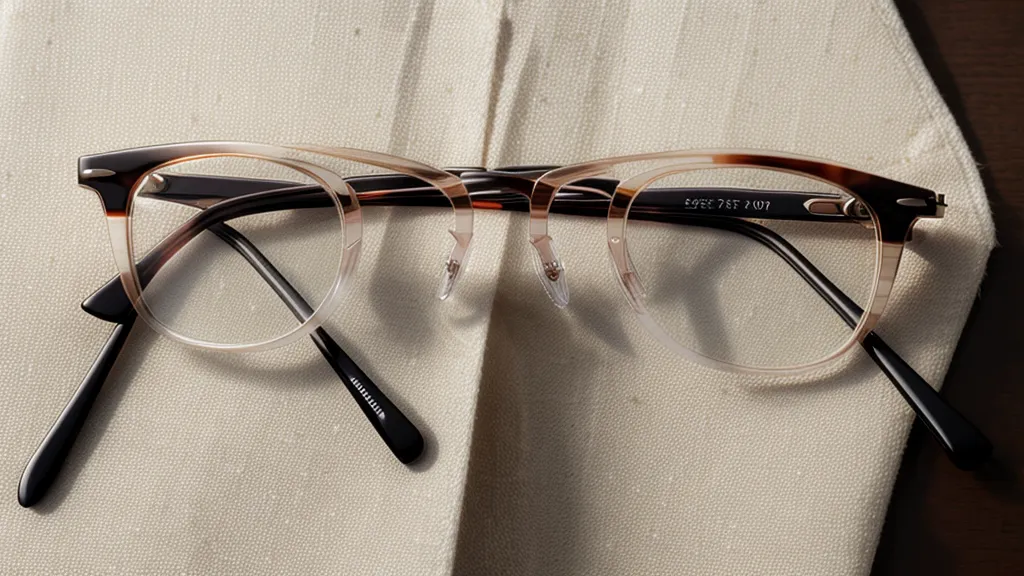
Which Measurements Should You Filter By on Yesglasses?
Skip the gender and age categories and go straight to the spec filter. Yesglasses lets you search by total frame width, so setting that ceiling under 130mm cuts the catalog down fast — I ran that filter from a corner table at Tower Café on 16th Street in Midtown Sacramento, tabbing between the spec sheet and my own spreadsheet. Their 'Petite' adult styles, in my experience, carry the same acetate finish you'd get in a full-size frame meant for professional wear, which the kids' section doesn't really match. Lock the lens width to 48mm and the bridge to 16mm and the frame stops migrating down your nose every time you look down at a page.
Temple length gets overlooked in almost every 'small face' guide I've read. A 140mm or 145mm arm on a narrow head usually curves past the ear before it can hook onto anything, so you lose the grip that's supposed to hold the glasses in place. Targeting 135mm instead means the hook actually lands where your ear is. When this particular order arrived, I measured hinge to hinge with metal calipers and came within half a millimeter of the listed spec — close enough that my copyediting brain, which isn't built for slack, was satisfied.
Do Narrow Frames or Adjustable Nose Pads Fit Better?
Here's where most small-face buying advice gets it backward: chasing the narrowest total frame width isn't always the right move. A slightly wider frame with adjustable metal nose pads can grip better than a fixed-bridge 'Petite' style, because you can pinch the pads to match a narrow bridge instead of hoping a molded piece of plastic happens to fit. That keeps vertex distance — the gap between the back of the lens and your eye — steady through long stretches of close reading, instead of watching it drift as the frame creeps down page after page.
A friend who spends weekends kayaking the Sacramento-San Joaquin River Delta once asked whether pads like that hold up outside a desk job, and the honest answer is that they hold up better than a fixed bridge, since you can retighten them with your fingers instead of trusting shape memory in cheap plastic. If you can't find anything narrow enough in a 'Small' collection, look at 'Standard' frames with adjustable pads before giving up on the fit entirely — it changes the physics of how the glasses sit on your face.
Keeping Lens Edges Thin Without Sizing Up
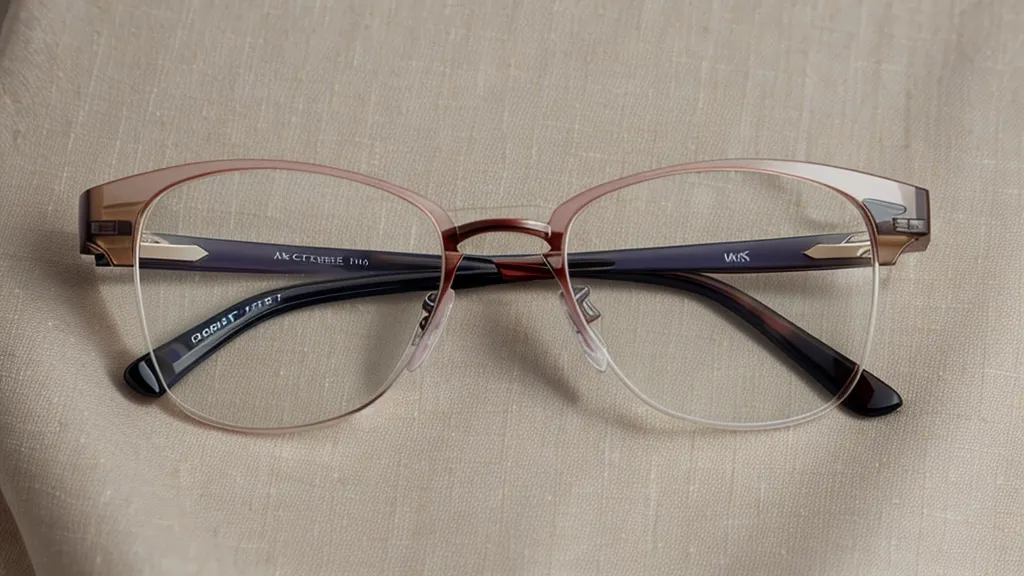
Material matters too, though I've made the full high-index case elsewhere and won't rehash it here — the short version is that 1.67 stays noticeably thinner at the edge than 1.50 in a small frame. I've written before about choosing eyeglass frames for high myopia to hide thick lens edges, and the rule holds here too: smaller lens width means thinner edge, whatever index you pick.
Hold a finished frame up to a window and trace the edge with a fingertip. On this 48mm pair it barely rises above the frame material; do the same thing on a wider pair from an older order and you can feel the step where the lens edge juts past the rim. There's no dull ache behind my ears by the end of a long editing day either, because 48-16-135 actually matches my head instead of relying on squeeze to stay put. I also stick with a durable anti-reflective coating, since I use glasses hard and expect them to hold up; I judge coatings the way you'd judge a detergent across wash cycles, not by the marketing claims on the box, in my notes on best lens coatings for prescription glasses after months of use.
PD, Astigmatism, and the Rest of the RX Card
The touch of astigmatism on my prescription means cylinder and axis have to be entered correctly at checkout too, and getting a toric fit right through an online order is its own tangle I've unpacked separately, so I'll leave it there for this piece. The same principle explains why a pair of dailies I put in before six in the morning are still perfectly comfortable when I take them out after nine that night: the numbers on the box matched the numbers on my card, so nothing rubbed or drifted. Wrong measurements show up in contact lenses too — they're just quieter about it than a frame sliding down your nose in a meeting.
Whichever shop you use, matching the lens material and PD printed at checkout against your actual RX card before you confirm the order catches most problems before they turn into a return. That single habit has saved me more shipping delays than any five-star review ever has.
A Few More Reader Questions About Small-Face Orders
Does insurance cover a frame order like this one? Only if you're willing to file for out-of-network reimbursement yourself afterward, since Yesglasses doesn't run insurance at checkout the way an in-network optical shop does. Will an unbranded overseas site save you money on the same specs? I tried that route once, and the PD came back off while the frames landed two weeks past the delivery date the site had promised, so whatever I saved on the sticker price got eaten by the return and reorder that followed.
Is there a subscription hiding in a frame order? No — frames are a one-time purchase, not a recurring charge, which is the first thing a reader named Fletcher Nwankwo asked when he wrote in. He reads every cancellation clause before he subscribes to anything, so he wanted to know if Yesglasses buried an auto-renewal into checkout the way some contact lens subscriptions do; it doesn't, because there's nothing to renew. Do the same numbers apply if you're ordering contacts instead of frames? Width and bridge don't carry over, but base curve and diameter do the equivalent job on a contact lens prescription — they're just written in different shorthand, which I've broken down in a separate piece for anyone placing their first online contacts order.
None of this stays true for long if you're careless with the lenses in between orders. A plain t-shirt is the fastest way to turn a good coating cloudy, which is why I keep a strict cleaning routine now, laid out in how to clean prescription glasses without damaging lens coatings.
Should you switch between monthlies and dailies while you wait on a frame order to ship? That's more a replacement-schedule question than a frame-fit one, and it depends on how many hours you're actually parked in front of a screen, which I cover elsewhere in more detail. For a small face, the takeaway that holds up across every order in my archive is simple: trust the millimeters etched on the temple arm over whatever category the shop filed the frame under, and don't rule out a 'Standard' style with adjustable pads just because it isn't labeled 'Petite.'